
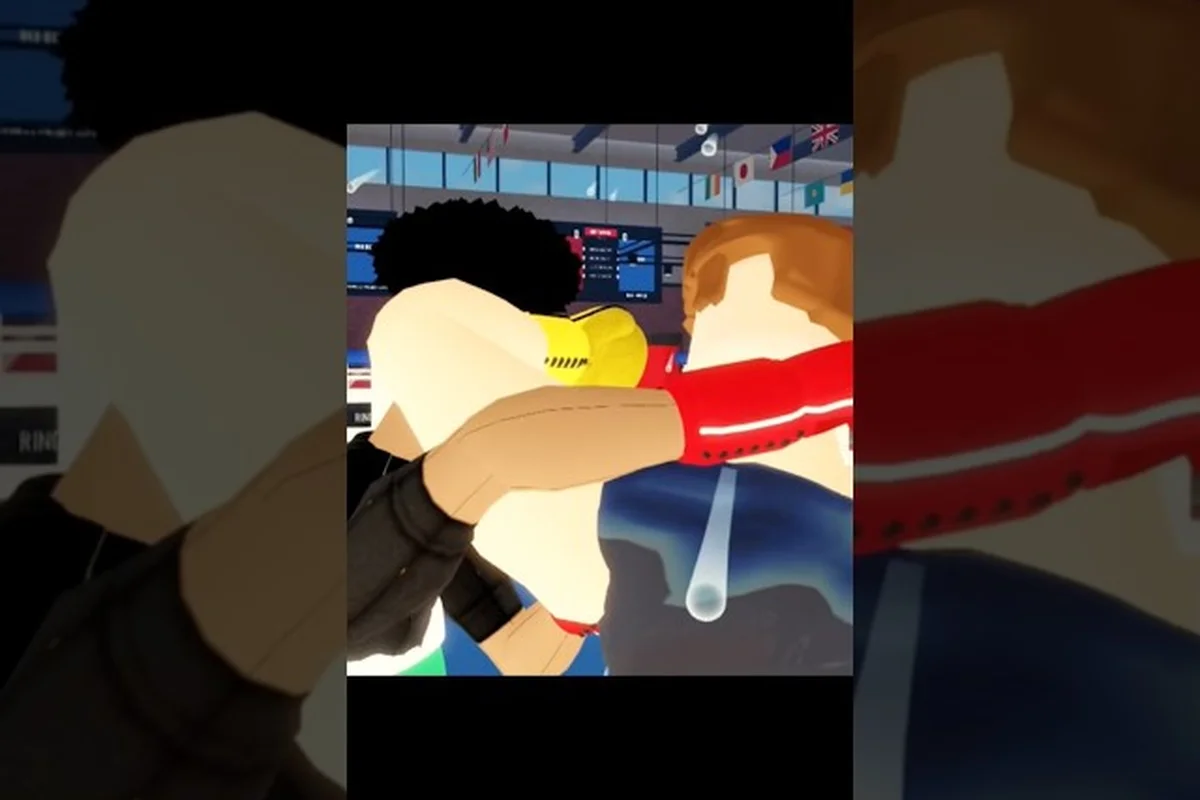
Most fights in First Person Boxing are decided before a single clean punch lands. The player who controls space — who sees the corners forming, the ropes creeping in, the angles opening and closing — walks away with the exchanges that matter. Sharp boxing ring awareness is the difference between chasing a retreating opponent and calmly stepping them into a trap they cannot escape.
According to the official store page, the experience is built around five core mechanics: punches, slips, head and body guards, counters, and a stamina pool that slows you down when it empties. Every one of those mechanics lives or dies on positioning, and positioning lives or dies on how well you read the ring around you. This guide breaks down the angles, the footwork patterns, and the pressure concepts that turn ring awareness from a vague instinct into a deliberate, repeatable skill.
Reading the Ring in First Person Boxing
Ring awareness in First Person Boxing starts with one simple question: where is the safe space? The ring has four sides, and only the center is genuinely neutral. Every step you take either moves you toward the center or pushes you toward a boundary. The player who notices the boundary first owns the geometry of the round.
Because the game runs from a first-person perspective, your visual field mirrors the way a real boxer sees the world: the opponent fills the center, the ropes and corners live in your peripheral vision, and the canvas under your feet is the only map you have. Learning to glance at your feet and re-check your opponent's shoulders in the same beat is a habit that separates patient fighters from button mashers.
The official description notes that servers hold up to 16 players, and player-versus-player matches are the headline mode. That density of opponents makes ring awareness even more valuable in crowded rooms, because every extra body is another geometry puzzle to solve. Reading the ring is not a passive skill — it is the foundation every other boxing concept in this guide builds on.
Why Geometry Beats Reflexes
Reflexes decide who wins a single exchange. Geometry decides who wins the round. A fighter with average hands but excellent spatial reading can outpoint a twitch-finger opponent simply by stepping into the angles where punches are hardest to throw and easiest to land.
The five official mechanics all reward spatial reading in different ways. Slips work because they change the line your opponent is aiming down. Guards split into head and body because the angle of attack tells you which one to raise. Counters land when you have predicted the lane. Even stamina punishes you more harshly when you are cornered, because retreating costs more energy than advancing.
| Mechanic | What Geometry Adds | Without Ring Awareness |
|---|---|---|
| Punches | Choose the lane your opponent cannot cover | Swing into a raised guard |
| Slips | Step offline to create counter lanes | Slip into the ropes |
| Head guard | Raise before the high angle arrives | React too late, eat clean |
| Body guard | Close the inside lane before the hook | Guard high, body cracked |
| Stamina pool | Manage energy by cutting escape routes | Tire yourself out while chasing |
Players who treat the ring as a static backdrop get punished because the ring is never static. Your opponent is moving, the camera is moving, and the boundary is creeping in. Geometry is the layer that turns the chaos into a puzzle you can solve on the fly.
The Three Zones of the Canvas
Every First Person Boxing ring can be divided into three working zones, and each one demands a different mindset. Veteran players report that recognizing which zone you occupy is the single biggest upgrade you can make in your first ten matches.
-
Center zone — Neutral ground. You can step in any direction. Use this for outboxing and reading patterns. Do not stay here long if your opponent is faster.
-
Edge zone — The strip just inside the ropes. Your escape lanes shrink with every step. Pressure fighters hunt here because retreating options thin out fast.
-
Corner zone — The trap. Both fighters are close to a boundary. Inside fighting and clinch-like pressure thrive because there is nowhere to go.
If you want a deeper look at the standard ring layout and the ropes mechanic, the First Person Boxing ring guide covers the geometry in more detail and pairs well with the angles discussion in the next section.
Boxing Angles and How to Create Them
Angles are the heart of ring awareness. An angle is simply any line of attack that is not straight ahead. The moment you step offline, your opponent's straight punches lose their target and your hooks, uppercuts, and counter straights suddenly have clean lanes to land.
In First Person Boxing, the first-person camera makes angle creation feel disorienting at first. You cannot see your own feet clearly, so stepping offline feels like teleporting. That disorientation fades with practice, and once it does, the entire ring opens up. A 45-degree step to either side is the foundation of every angle in the game, and it costs almost no stamina when done correctly.
According to community data, players who deliberately train their footwork win a noticeably higher share of exchanges than players who only train their hands. The reason is simple: hands follow feet. If your feet are square, your hands are predictable. If your feet are angled, your hands have options.
Building the Standard 45-Degree Step
The 45-degree step is the smallest unit of angle work. It is one short sidestep combined with a small forward push, taken in a single smooth motion. The goal is to end up beside your opponent rather than in front of them, so that your straight punches now travel across their guard instead of into it.
A reliable training drill is to spend one full round doing nothing but 45-degree steps. Do not punch. Do not guard. Just step offline, reset, step offline the other way. After three or four rounds, the motion becomes second nature, and you can start layering punches on top of it. The drill is boring, but it is the fastest path to clean angle creation.
| Step Type | Stamina Cost | Best Use Case | Risk |
|---|---|---|---|
| Small 45° | Low | Creating counter lanes | Easy to read if repeated |
| Sharp 90° | Medium | Escaping after slipping | Exposes your back briefly |
| Lateral circle | High | Sustained pressure fighting | Drains stamina fast |
| Diagonal back | Low | Resetting to center | Gives ground away |
The 90-degree step deserves special attention. A full pivot offline is the most dramatic angle change in the game, and it is the move that turns a slip into a counter. The slip input moves your head, the pivot step moves your body, and the counter punch lands while your opponent is still finishing the punch you dodged. That three-piece combination is the single highest-value sequence in the game for players learning angle work.
Reading the Opponent's Angles
Creating angles is only half the skill. Reading the angles your opponent is trying to create is the other half. The first-person perspective gives you one major tell: the opponent's shoulders. A square shoulder line means a straight attack is coming. A dipped shoulder means a hook or uppercut is loading.
Players report that the first 30 seconds of a round are mostly spent gathering angle data. Watch the shoulders, watch the lead foot, and watch the hips. The hips tell the truth last but most reliably — a hip turn commits the entire body to a direction, and once the hips go, the punch is about a third of a second behind. Reading those cues is what lets you step into the counter lane instead of eating the attack head-on. If you are still getting comfortable with the camera and movement controls, the keyboard vs controller guide has practical tips for managing camera angles and input settings that pair well with the angle drills above.
Cutting Off the Ring and Pressure Fighting
Cutting off the ring is the discipline of removing your opponent's escape routes. Pressure fighting is what you do once those routes are closed. Together they form the most dominant style in First Person Boxing when executed well, because they turn the geometry of the ring into a weapon.
The basic idea is simple: instead of chasing your opponent in a straight line, you walk at an angle that pushes them toward the ropes or a corner. Every step they take to retreat puts them one step closer to a boundary. Once they hit that boundary, their options collapse, and your inside fighting game opens up.
Pressure fighting is stamina-hungry by design. The official description confirms that stamina slows you down when it empties, and cutting off the ring burns stamina faster than outboxing. That tradeoff is part of the design. Pressure fighters win by spending stamina efficiently and forcing their opponent to spend even more by retreating into bad positions.
The Three Pressure Patterns
There are three reliable pressure patterns that experienced players use to cut off the ring. Each one fits a different situation, and rotating between them keeps your opponent guessing.
-
The funnel — Walk forward in a slight curve that points toward the nearest rope. The opponent's retreat options narrow with every step. Best when you have a stamina advantage and they are already near a boundary.
-
The mirror — Match your opponent's lateral movement so they cannot circle out. Each sidestep they try is shadowed by your sidestep. Best against outboxers who rely on footwork.
-
The trap — Fake a retreat, then cut sharply across the ring as your opponent presses forward. Best against aggressive fighters who chase openings.
| Pattern | Best Against | Stamina Cost | Key Risk |
|---|---|---|---|
| Funnel | Retreaters | High | Easy to overcommit |
| Mirror | Outboxers | Medium | Requires constant focus |
| Trap | Aggressive fighters | Low to medium | Punishable if the fake is read |
Rotating between these patterns within a single round is what makes a pressure fighter hard to solve. A pure funnel player is readable after two rounds. A player who funnels for 30 seconds, mirrors for 20, and traps on a third exchange forces the opponent to make decisions under pressure, and pressured opponents make mistakes.
Common Pressure Fighting Mistakes
Pressure fighting is unforgiving when done wrong, because the stamina cost punishes inefficiency. The most common mistake newer players make is walking straight forward. A straight approach gives the opponent a clean line to circle out, and you spend stamina covering ground without gaining positional advantage.
The second most common mistake is committing to pressure without a plan for when the opponent does manage to circle. The mirror pattern fixes this, but only if you practiced it before the match. Trying to learn mirroring mid-round is a recipe for eating counters.
Finally, many players forget that pressure fighting is not just walking forward. It is walking forward with purpose, cutting off angles, and being ready to pivot into inside fighting the moment your opponent runs out of room. Pressure without a finishing plan is just expensive outboxing.
Inside Fighting and Outboxing: When to Switch
Every boxer in First Person Boxing eventually has to choose between fighting on the outside and fighting on the inside. Outboxing is the longer range: straights, jabs, and angle work that keeps you out of counter range. Inside fighting is the close range: hooks, uppercuts, body work, and the kind of grinding exchanges that happen when two fighters are tied up near the ropes.
The two styles are not opposites. They are gears. A smart fighter outboxes until the geometry forces an inside exchange, then survives the inside exchange and resets to outboxing range. The ability to switch gears on demand is what experienced players call range management, and it is the highest-level application of ring awareness.
According to the official store page, both player-versus-player and AI practice modes are supported. Practice mode is the right place to drill range switches, because the AI lets you reset position without losing a round. Player matches are where the switching has to happen under pressure, with stamina and the clock both working against you.
Reading the Range Cues
The first-person camera makes range cues surprisingly clear once you know what to look for. When you are in outboxing range, you can see your opponent from roughly the chest up, and their hands are clear visual targets. When you close to inside range, the view fills with shoulders and heads, and individual punches become harder to distinguish.
That visual shift is your cue. When the screen fills up, you are inside. When you can see space around the opponent, you are outside. Training yourself to notice the shift — and to react to it with a deliberate range decision — is one of the fastest ways to improve overall match performance.
| Range | Visual Cue | Best Mechanics | Stamina Cost |
|---|---|---|---|
| Long outboxing | Whole opponent visible | Straight punches, jabs, slips | Low |
| Mid outboxing | Chest and head visible | Angled straights, lead hooks | Medium |
| Inside range | Shoulders fill the view | Body work, uppercuts, clinch pressure | High |
| Phone booth | Heads only, very tight | Short hooks, shoves, desperate counters | Very high |
The "phone booth" range is worth naming because it is where most rounds are decided. When two fighters are this close, stamina is burning, the ropes are usually nearby, and the next clean punch often ends the exchange. Players who panic in the phone booth lose. Players who stay calm and pick a single clean shot usually win it.
Inside Fighting Fundamentals
Inside fighting rewards a different skill set than outboxing. You cannot rely on angles because there is no room for them. Instead, you rely on guard management, body work, and short, committed punches. The head guard and body guard split exists for exactly this reason — at inside range, the choice between guarding high and guarding low is a real-time decision you have to make every second.
A reliable inside sequence is: guard high to block the incoming head punch, slip offline a few inches, throw a short hook to the body, then push off to reset to mid range. That four-step pattern uses every official mechanic — guards, slips, punches, and stamina management — in a tight combination that works at any skill level.
The body is the most underused target at inside range. New players chase the head because knockouts are exciting, but the body is where stamina damage accumulates. The official description confirms that stamina is a real pool that slows you down when it empties, which means body work has a strategic value beyond the immediate punch. Drain the stamina, then go hunting for the head.
For a broader overview of how these ranges fit into a full match plan, the First Person Boxing beginner guide walks through match flow from the very first round and is a good complement to the range-switching concepts in this section.
Ring Awareness Game Plan
Concepts only become skills through deliberate practice. The following drill plan is built around the ring awareness ideas from the previous sections and is designed to be run in practice mode, which the official store page confirms is available alongside player-versus-player play.
Each drill focuses on a single awareness skill and uses minimal mechanics, so you can build the habit without burning stamina on flashy combinations. Spend at least three rounds on each drill before moving to the next, and revisit any drill that feels shaky.
| Drill | Focus | Time | Success Metric |
|---|---|---|---|
| Center holds | Owning the center zone | 3 rounds | Opponent circles, you stay near middle |
| Angle ladder | 45° step, then 90° pivot | 3 rounds | Both angles feel automatic |
| Funnel pressure | Walk the opponent to the ropes | 3 rounds | They hit a boundary within 20 seconds |
| Mirror drill | Shadow lateral movement | 3 rounds | You never lose the angle |
| Range switch | Outbox to inside to outbox | 3 rounds | Smooth range change every 5 seconds |
| Body-first inside | Land 3 body shots before any head shot | 3 rounds | Inside sequence feels controlled |
By the end of the plan, the individual skills should start chaining together. A center hold naturally sets up a funnel. An angle ladder creates the counter lane that the funnel needs. A range switch turns a defensive moment into an offensive one. That chaining is what ring awareness actually looks like in a real match — not one skill at a time, but several skills firing in the same second. If you want to push further once these drills feel automatic, the First Person Boxing advanced guide covers higher-level strategy and is the natural next step after ring awareness is locked in.
Frequently Asked Questions
What is boxing ring awareness in First Person Boxing?
Boxing ring awareness is the skill of reading the canvas geometry, the ropes, and your opponent's position so that every step you take either creates an angle or closes an escape route. It is the foundation that makes punching, slipping, guarding, countering, and stamina management all work together rather than fighting each other.
How do I practice boxing angles without losing stamina?
The most efficient angle drill is the 45-degree step ladder done without punching. One small sidestep plus a short forward push, reset, then step the other way. Because no punches are thrown, stamina stays nearly full, and after a few rounds the motion becomes automatic. Once it is automatic, you can layer punches on top without the movement breaking down.
When should I switch from outboxing to inside fighting?
Switch to inside fighting when the geometry forces it — usually when your opponent has their back near a rope or a corner and outboxing range no longer exists. The first-person camera fills with shoulders and heads at inside range, which is your visual cue. Outboxing is your default, but the ability to switch to inside fighting on demand is what wins close rounds.
How do I cut off the ring without burning all my stamina?
Rotate between the funnel, mirror, and trap pressure patterns instead of committing to one. Each pattern spends stamina differently, and rotating keeps your opponent from reading the approach. Always finish a pressure sequence with a reset to mid range so you can recover stamina before the next push.
Does pressure fighting work against outboxers in this game?
Yes, but only if you mix the mirror pattern into your pressure game. A pure forward walk against an outboxer is a stamina drain, because they will circle out indefinitely. Mirror their lateral steps, close the circle slowly, and the outboxer runs out of room. Once they are on the ropes, the inside fighting game takes over and the pressure pays off.