
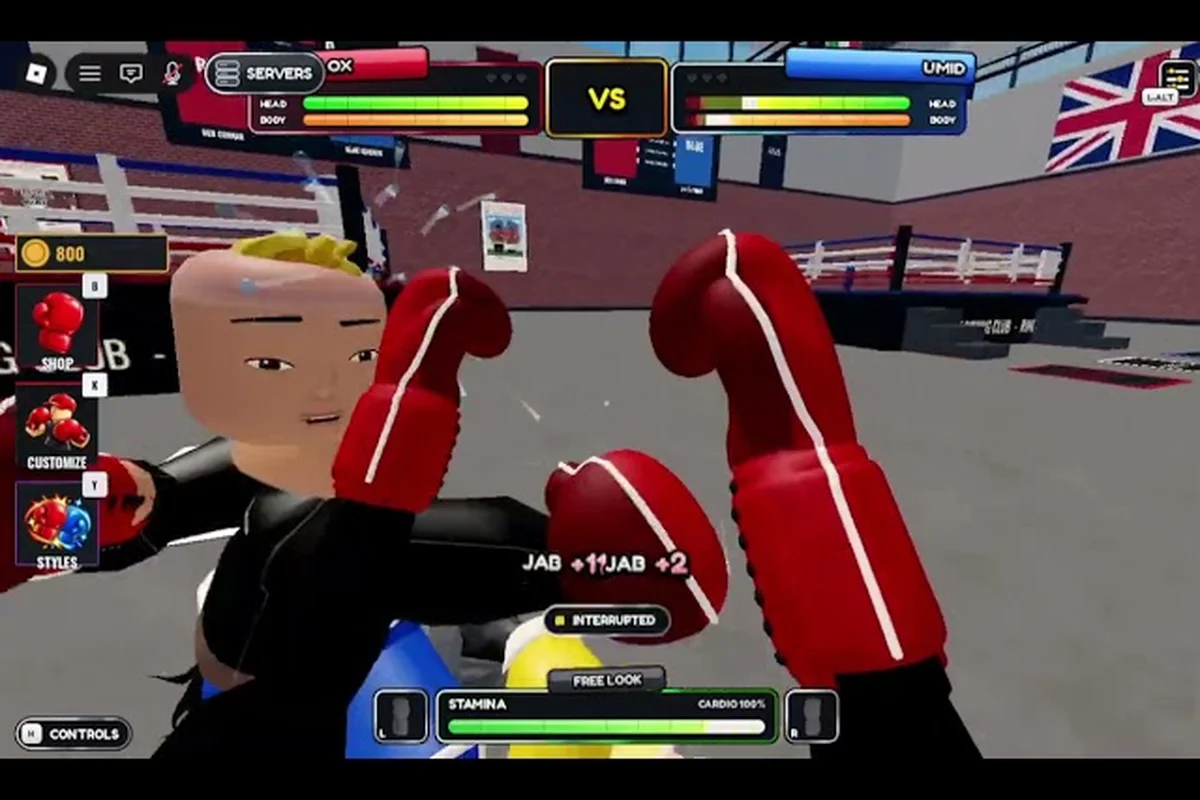
Your first time stepping through those ropes in First Person Boxing can feel louder than it looks. The game throws you straight into a close-quarters ring where the camera sits behind your gloves, every punch weight matters, and the stamina bar quietly punishes anyone who swings too hard too early. This first person boxing guide is built for new players who want a calm plan before the bell rings, not a wall of jargon. We'll cover the core mechanics, the simplest rookie habits, and the small adjustments that turn a shaky opener into a confident first match.
Core Mechanics Every Rookie Must Learn First
Before worrying about fancy footwork or counter timing, you need a clear picture of the five mechanics the game actually names in its official description. According to the official Roblox store page, the published by Moonlet under the group "Can You Box?", First Person Boxing runs on a tight set of tools: punches, slips, a guard split into head guard and body guard, counters that can produce a knockout, and a stamina pool that slows you down when it gets low. Each tool has a job, and your first match becomes much easier when you stop treating them as separate tricks and start treating them as one rhythm.
Punches, Slips, and Guards
Punches are your damage engine, and in this first-person view they land wherever the camera points. New players tend to spam the punch input the moment they see an opening, which usually drains stamina and leaves them flat-footed. Slips are the smallest movement tool in the game: a quick head shift that lets a punch slide past your guard instead of into it. The head guard and body guard are separate inputs, so you can choose whether to protect the top half or the bottom half of your boxer. Beginners should default to a higher guard until they learn to read what their opponent is throwing, because high punches are the most common follow-up after a missed slip.
Counters and the Stamina Pool
Counters are the moment a punch from your opponent runs into a guard or slip that is timed well enough to interrupt their action. When a counter connects cleanly, the game rewards you with a chance at a knockout, and the camera plays out a cinematic knockdown. The stamina pool is the hidden referee of the whole fight: the official description says it slows you down when it empties, which means a tired boxer swings slower, recovers slower, and gets clipped by counters they would normally avoid. Treat stamina like a health bar for your ability to act, and your first match will feel far more controlled.
Modes You Can Practice In
Two ways to fight are listed officially: against other players in player-versus-player matches, and against AI in practice. According to community data, the practice option is where the majority of rookies learn the punch and guard inputs, because the AI does not punish sloppy habits the way a human will. The game also lists a RANKED + BUG FIX! event page for a new ranked mode, but the developer has not published any detail on how ranked mode actually works, so treat that as "ranked mode exists" and nothing more for now.
| Mechanic | What it does | Rookie habit to build |
|---|---|---|
| Punches | Main damage tool, aimed by camera | Throw single shots, not flurries |
| Slips | Small head movement to avoid punches | Use after a missed guard, not before |
| Head guard | Protects high punches | Default guard for new players |
| Body guard | Protects low punches | Switch when opponent attacks the body |
| Counter | Timed block that can lead to a KO | Only on committed opponent swings |
| Stamina pool | Slows you when empty | Stop swinging before you feel the slowdown |
The Ring and the First Match Setup
Knowing the mechanics is one thing, but understanding the ring layout is what keeps your first person boxing first match from feeling like chaos. According to community reports, the ring is a small square with ropes on every side, and the camera is locked close to your boxer's head, so depth perception is different from a third-person fighter. Movement inputs move your feet, and the camera turns with the mouse or stick, which means the angle of your punch is the angle of your camera. Anything you cannot see, you usually cannot hit cleanly.
Match Types You Will See
The official description lists two fight formats: against other players and against AI in practice. Community testing also describes a free-for-all style format on some servers, but the developer has not published a full mode breakdown, so the safest assumption is that the first match you queue for will be a one-on-one contest against another live player. Servers can hold up to 16 players according to the official page, which means a lot of lobbies are not full one-on-one rooms; you may see a mix of duels, small scrimmages, and free-for-all sparring until you find a quiet match.
Reading the Camera and Distance
In first-person view, the distance between you and your opponent is mostly visual. Community data suggests rookies misread this distance constantly in their first match, because the camera makes a jab look closer than it really is, and a body shot look farther. A simple way to calibrate: when your opponent's head fills roughly the upper third of the screen, you are at a clean jab range. When you see only their shoulders, you are too far. When you see their gloves overlapping yours, you are too close to throw without getting countered.
The Bell, the Rounds, and What "Win" Means
The official description does not publish round counts, judges' scorecards, or knockout timers, so the cleanest definition of a win is the one the game shows on screen: either you score a knockout, or the match ends and a winner is announced. Cinematic knockdowns and replays are part of the published feature list, so expect a short slow-motion moment when a clean counter lands. Treat every early match as a learning round, and do not chase highlight-reel knockouts until the basics feel automatic.
| Match element | What is published | What is not published |
|---|---|---|
| Fight type | PvP and AI practice | Specific ranked rules, tier names, season length |
| Players per server | Up to 16 | How many are in a single match at once |
| Knockout reward | Cinematic knockdown and replay | KO timer, health value, damage numbers |
| Mode variety | Player and AI confirmed | Free-for-all rules, duel rules, event rules |
A Rookie Game Plan for Your First Match
Walking into a first match without a plan is the single most common rookie mistake in this game, because the first-person camera punishes hesitation. A simple three-step game plan keeps you focused: survive the first thirty seconds, learn one opponent habit, and finish the round with at least one clean counter. This is the heart of any solid first person boxing guide for new players, because the goal is not to win your first match, it is to finish it with information you can use in match two.
Step 1: Survive the Opening Exchange
Spend the first half-minute guarding high, moving in small circles, and throwing single jabs to feel the range. Do not commit to any big combination, and do not chase the opponent around the ring. According to player reports, the player who swings first usually loses the first exchange, because the camera angle makes counters easier when you are already committed to a punch. Your job in step one is to let the opponent throw first, slip or guard, and counter with a single shot back.
Step 2: Learn One Thing About Your Opponent
Pick one habit to study, and ignore everything else. The easiest habits to read for a new player are: does your opponent throw mostly to the head, or do they mix in body shots? Do they back up after every missed punch, or do they stand still? Do they guard high, or do they drop their guard after a slip? Once you see the pattern, the counter becomes obvious. If they throw high, drop into body guard and counter. If they throw body shots, raise the head guard and slip the next one. The community data suggests that the average rookie loses fights because they try to read three things at once instead of one.
Step 3: Land One Clean Counter and Reset
Your goal for the first match is a single clean counter that produces a knockdown, not a flurry that empties your stamina. Once that counter lands and the cinematic plays, back off and reset your guard. The game rewards clean counters with a chance at a knockout, and a tired boxer cannot capitalize on that chance. After the reset, repeat the same read: bait the same attack, slip or guard, and counter again. A two-punch rhythm is the cleanest first-match loop, and the stamina pool will thank you for keeping it short.
| Step | Goal | Key action | Mistake to avoid |
|---|---|---|---|
| Survive | Last 30 seconds without taking big damage | Guard high, move, throw single jabs | Throwing big combinations early |
| Learn | Read one opponent habit | Watch head or body target only | Trying to track every movement |
| Counter | Land one clean counter | Slip or guard, then one shot | Spamming punch to "finish" the KO |
For a broader foundation that pairs well with this plan, the First Person Boxing beginner guide walks through how to actually enter practice mode and warm up before queuing.
Common Rookie Mistakes and How to Fix Them
Even with a plan, every rookie develops habits that hold them back. The good news is that most of those habits show up in the first two matches, and they are easy to fix once you can name them. This section is the practical rookie tips half of the first person boxing guide, and it focuses on the four mistakes that community reports flag most often: spamming punches, ignoring stamina, guarding the wrong height, and forgetting the camera.
Mistake 1: Punch Spam
The most common rookie habit is to hold the punch input and let the gloves go. The stamina pool punishes this almost immediately, and once it empties, the game slows you down and your opponent gets free counters. Community testing suggests that a boxer who throws single jabs in rhythm usually out-lasts a spammer even if the spammer lands more raw punches, because the rhythm boxer still has stamina for the final exchange. The fix is simple: pick a count, throw that many punches, then reset your guard before throwing again.
Mistake 2: Ignoring the Stamina Bar
Because the stamina pool is the only resource you manage besides positioning, ignoring it is the fastest way to lose a match. According to the official description, the bar slows you down when it gets low, but it does not tell you the exact number, so you have to feel it. Most rookies describe the feeling as "heavy gloves" or "laggy movement." When that feeling starts, stop swinging and move. Recovering stamina by moving and guarding is faster than recovering it while throwing body shots into a defended opponent.
Mistake 3: Guarding the Wrong Height
New players default to one guard height and never switch, which means the opponent can target the other half all match. The head guard catches punches aimed at the top of your boxer, and the body guard catches punches aimed at the stomach and ribs. According to community data, the easiest read for a rookie is to watch the opponent's shoulder: if their shoulder dips before the punch, expect a body shot and lower your guard. If the shoulder stays level, expect a head shot and raise your guard. Switching guard height is a small input, but it is the difference between taking a clean hit and starting a counter.
Mistake 4: Forgetting the Camera
In a first-person game, the camera is your eyes, and rookie players sometimes forget they can move it. Looking down can help you judge distance to the opponent's body, while looking up gives a clearer view of head movement. The slip input is small, so any camera wobble can throw off your timing. Pick a stable camera position, keep the opponent's head near the center of the screen, and avoid yanking the view around mid-exchange.
| Mistake | What it looks like | Quick fix |
|---|---|---|
| Punch spam | Holding the punch input | Throw 1-2 shots, then reset |
| Stamina ignore | Heavy, slow movement late in the match | Stop swinging, move, recover |
| Wrong guard height | Always high or always low | Watch the opponent's shoulder |
| Camera wobble | Missing slips by an inch | Keep the head centered, move slowly |
Match Settings and Game Mode Choices
Your first match experience also depends on which mode you actually queue into. The official description confirms PvP and AI practice, and the First Person Boxing match settings page covers the broader mode options the community has mapped out. The cleanest path for a rookie is to spend your first sessions in AI practice, then move into quiet PvP lobbies where you can focus on a single opponent.
AI Practice as a Warm-Up
AI practice is the lowest-pressure place to learn the inputs, because the bot does not punish a missed slip the way a human will. Use the practice mode to confirm your guard switches work, your slip timing is consistent, and your stamina bar recovers when you stop throwing. According to community data, players who spend at least one full session in practice before their first PvP match tend to last noticeably longer in that first match, simply because their inputs no longer require thought.
Picking Your First PvP Match
When you move to PvP, look for a lobby with only two players if the game offers that option. A 1v1 setup gives you a single read to make, which fits the one-habit game plan from the previous section. Larger free-for-all lobbies are more chaotic and better suited for a second or third session, once you can already land a clean counter in practice. If you do end up in a larger match, the same rules apply: survive, learn one habit, land one counter, reset.
Ranked Mode and What Rookie Players Should Know
The official event page lists RANKED + BUG FIX! with the subtitle "New ranked mode!", which confirms ranked mode exists, but no detail on tier names, rating formulas, season length, or placement rules has been published. For a first match, that means ranked is the wrong place to start. Stick with casual PvP and AI practice until the developer publishes more about how ranked actually scores, and revisit it once your counter timing feels automatic.
| Mode | Best for rookies? | Why |
|---|---|---|
| AI practice | Yes | Low pressure, learn inputs |
| Casual PvP 1v1 | Yes after warm-up | One opponent to read |
| Free-for-all | Later | More variables, harder to plan |
| Ranked mode | Not yet | Rules and scoring not published |
For a deeper walkthrough of the ring itself, the First Person Boxing ring guide covers how distance and camera angle change between the corners and the center.
After Your First Match: Building Forward
Your first match is not the finish line, it is the baseline. The most useful thing you can do after the bell is spend thirty seconds remembering the one habit you spotted in your opponent and the one moment where your stamina dipped. That is the only information you need for match two, and it lines up exactly with the new player walkthrough loop this guide is built around. According to community reports, players who keep a tiny mental note after each match tend to improve noticeably faster than players who just queue again immediately, because they walk into the next match with one specific thing to test.
Building a Two-Match Routine
A simple rookie routine: play one match, rest, play one more match, then stop. Each match should focus on a single goal, such as "land one clean counter" or "switch guard height at least once." Rotating the goal across two matches stops you from over-training any one habit and keeps the stamina pool honest. Community data suggests that the third match of a session is usually the one where stamina management collapses, because the player stops noticing the slowdown.
When to Revisit Practice Mode
If you finish a match and cannot remember landing a single clean counter, that is a signal to go back to AI practice for a round. Practice mode is not a punishment, it is a calibration tool, and the official description lists it as one of only two confirmed ways to fight. Spend a few minutes re-checking your guard switches, then return to PvP with a tighter goal.
Taking the Next Step
Once your first match feels less like survival and more like a real round, the next layer of detail lives in the broader First Person Boxing tutorial. That piece digs into how the camera, guard, and slip inputs connect over a longer session, which is the natural follow-up to the first-match focus in this guide.
Frequently Asked Questions
What should a new player focus on during the first person boxing first match?
Focus on surviving the first thirty seconds, reading one opponent habit, and landing a single clean counter. Use high guard by default, throw single jabs, and avoid spam, because the stamina pool slows you when it empties, and counters are easier to land when you are fresh.
How do the stamina and counter systems work in First Person Boxing?
The game has a stamina pool that slows your movement and punches when it gets low, and counters are timed blocks that can produce a knockout. The exact stamina numbers, counter damage, and KO timer are not published, so treat both as feel-based systems rather than exact meters.
Is it better to start in AI practice or PvP for a first match?
Start in AI practice to learn the punch, slip, and guard inputs, then move into a casual PvP match. Community data suggests rookies who warm up in practice last longer in their first PvP match, because their inputs no longer require thought when the bell rings.
Does First Person Boxing have a ranked mode for new players?
Ranked mode is confirmed to exist via the official RANKED + BUG FIX! event page, but the developer has not published tier names, rating rules, or season length. First person boxing rookie tips generally recommend skipping ranked until more is published, since the scoring system is not yet documented.
What is the easiest way to land a knockdown in a first match?
Bait a committed punch, slip or guard, and throw a single counter. The official description confirms counters can produce a knockout, and cinematic replays trigger on clean knockdowns, so one well-timed counter is more reliable than a flurry of punches.