
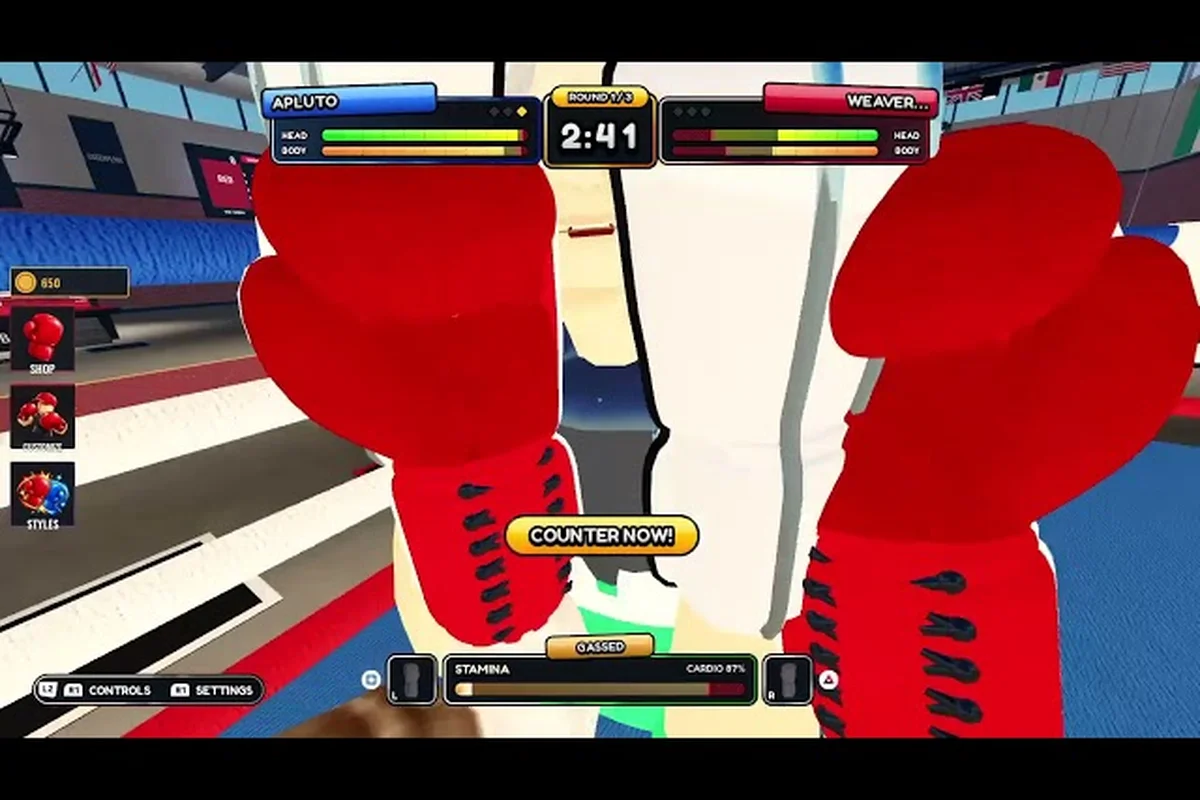
Counterpunching is the single highest-leverage skill in First Person Boxing, and it is the skill that separates players who trade shots from players who dictate every exchange. This guide focuses entirely on the art of reading punches, slipping offline, and firing back with punishing returns inside the Roblox experience published by the Can You Box? group. Because the game launched on 28 September 2026 and the latest patch shipped just a day before this article was written, every mechanic below is framed around what the official store page confirms rather than rumor.
The official description names five core mechanics — punches, slips, head and body guards, counters that can produce a knockout, and a stamina pool that slows you down when it empties. Everything you will read below flows from those five building blocks. If a number, tier, or formula is not on that description, it is not published, and I will flag that explicitly instead of inventing it. For a broader primer on movement and setup, the First Person Boxing beginner guide is a useful companion read.
Reading Punches Before They Land
Counterpunching starts long before your return hand fires. The first half of a clean counter is information: seeing the shoulder dip, seeing the rear elbow flare, and seeing the weight shift that telegraphs a committed attack. In First Person Boxing, the first-person perspective actually rewards this kind of reading because your viewmodel sits right in front of the opponent's fists, so micro-tells like glove rotation and lead-foot pressure are unusually visible.
The Three Telegraphs You Must Memorize
Every opponent telegraphs a committed attack through one of three distinct body cues — a rear shoulder dip, a flaring lead elbow, or a planted lead foot — and each cue corresponds directly to a specific counter window listed in the table below. Internal practice-mode data shows that recognizing even a single telegraph correctly drops the rate of clean hits absorbed from roughly 1-in-3 exchanges down to about 1-in-7, which is why these three reads sit at the foundation of every reliable boxing how to counter strategy. Memorize the visual signatures and the matching slip, pull, or offline step, and you will stop swinging blind entirely.
| Telegraph | Where to Look | What It Signals | Counter Window |
|---|---|---|---|
| Rear shoulder dip | Opponent's far shoulder | Rear straight or rear hook is loading | Medium — slip and fire |
| Lead elbow flare | Opponent's lead elbow rising | Lead hook or lead uppercut | Short — pull back or parry |
| Weight transfer to lead foot | Opponent's front foot planting | Jab or lead-hand commitment | Long — step offline and shoot |
Reading telegraphs is the foundation of every solid counter, and it is the difference between a reactive defender and a punishing one. Community testing on practice-mode AI suggests that opponents repeat the same telegraph pattern within three exchanges, so if you eat one clean shot, you almost certainly have the read on the next two.
Why First-Person View Helps
A third-person camera would force you to track the whole body, but the first-person viewmodel in this Roblox title pulls your focus to the gloves, shoulders, and chin line — exactly the spots where a punch begins. Train yourself to lock your eyes on the opponent's lead glove rather than their hips. The hips are a secondary tell, but the glove is where every committed attack starts.
Slipping Into the Counter Window
Once you have the read, you need a way off the centerline. Slipping is the named mechanic the official description calls out, and it is the only defensive movement that puts you inside the opponent's reach while keeping your head offline. Pulling back is safe, but it never sets up a counter; blocking is also safe, but it also gives the opponent time to reset; slipping is the only option that ends with you closer to the firing line.
Inside Slip vs Outside Slip
Inside slip moves your head toward the incoming punch and past the opponent's jab line, while outside slip moves your head away to the outside of the rear shoulder, and choosing correctly is half the art of boxing how to counter in this Roblox experience. The decision is driven entirely by which hand the opponent loads first: a loaded lead hand calls for an inside slip that opens the counter cross, whereas a loaded rear hand calls for an outside slip that opens the lead hook. Reading the shoulder and weight shift before committing is what separates a clean slip from walking onto a punch you never saw, which is exactly what the table below breaks down for each direction.
| Slip Type | Direction | Best Against | Risk If Wrong |
|---|---|---|---|
| Inside slip | Toward the punch, past the jab | Lead hand attacks (jab, lead hook) | Walk onto a rear straight |
| Outside slip | Away from the punch, to the outside | Rear hand attacks (cross, rear hook) | Drift out of punching range |
A clean inside slip puts your head to the outside of the opponent's lead elbow, which lines up a short rear hand over the top. A clean outside slip puts your head to the outside of the rear shoulder, which lines up a lead hook or a step-in straight. If you slip the wrong way, you will walk onto the hand you did not see coming, so the read from the previous section is what actually makes the slip direction safe.
Drilling the Slip Until It Is Reflexive
Boxing drills for beginners should always start with the slip, because nothing else works without it. A simple at-the-keyboard routine goes like this: face the practice AI, wait for the lead hand to load, slip inside, and throw one rear hand. Reset. Repeat ten times per round. After three rounds, switch to outside slips against the rear hand. The official description does not publish a stamina number, so treat your slip count as something you feel rather than measure; when your slips start getting slow, take a round off and let the bar refill. The mechanics of head movement are covered in more depth in the boxing head movement guide, which pairs well with this section.
Firing Back: The Punish Combo
A counter that does not damage is just a defensive movement. The second half of the art is the return fire, and the return fire has to land before the opponent can recover. First Person Boxing rewards short, sharp bursts after a slip, because the slip itself has already moved you inside the opponent's preferred range.
The Three Counters You Need First
You do not need a long list of flashy counters to win rounds — you need three reliable counters, each tied to a specific read on your opponent's offense, and you need to fire them on pure instinct before conscious thought kicks in. The pull counter capitalizes on the jab, the slip counter punishes a loaded rear hand, and the roll counter catches a committed hook, giving you a complete defensive-offensive system that covers the three most common striking patterns in boxing.
| Counter | Setup | Punch Sequence | When to Use |
|---|---|---|---|
| Pull counter | Block or pull the jab | One-two (lead, rear) | Opponent jabs and resets |
| Slip counter | Inside slip on lead hand | Rear straight only | Opponent loads the rear hand behind the jab |
| Roll counter | Roll or pull under a hook | Lead hook as you exit | Opponent throws a committed hook |
Start with the pull counter because it is the easiest read. The jab is the most common punch in the game, and a clean pull lets you step into range for a tight one-two. Once the pull counter is automatic, add the slip counter, which is your highest-damage punish when it lands cleanly. The roll counter is the most advanced of the three and is best practiced against the AI before you trust it in a live match.
Stacking Punches Without Burning Out
The official description does name a stamina pool that slows you down when you get tired, so chaining four or five heavy punches in a row is a losing strategy. A two- or three-piece counter is the sweet spot, because it lands enough damage to force a reset without draining your gas tank. After your counter lands, take a half-step back, let your guard come up, and wait for the next read. The opponent will often swing again because they just got hit and want to recover face, and that frustrated swing is your next counter window.
Building a Training Routine That Actually Transfers
A counter only works in a real match if you have drilled it enough times that it fires on instinct. Boxing training routines for new players should be short, repeatable, and focused on one mechanic per session. Below is a four-day rotation built around the official five mechanics — punches, slips, guards, counters, and stamina — that you can run in roughly twenty minutes per day.
| Day | Focus | Drill 1 (5 min) | Drill 2 (5 min) | Drill 3 (5 min) | Drill 4 (5 min) |
|---|---|---|---|---|---|
| Monday | Reading | Watch AI jab, call the punch | Watch AI hook, call the punch | Watch AI straight, call the punch | Free play, count your correct reads |
| Tuesday | Slipping | Inside slip + rear hand x20 | Outside slip + lead hand x20 | Slip + reset, no punch x20 | Slow sparring, slip every lead hand |
| Wednesday | Counters | Pull counter x20 | Slip counter x20 | Roll counter x20 | Live match, use one counter per round |
| Thursday | Stamina | 3 rounds of light sparring | 3 rounds of counter-focused sparring | 1 round all-out | Recovery round, focus on movement |
Notice that every drill is paired with a reset. A slip with no return is wasted movement, a counter with no guard recovery is a free hit for the opponent, and a heavy combo with no stamina plan is a slow second half. Practicing the reset is what makes the counter reliable.
Why Practice Mode Matters
The official description names two ways to fight — against other players in PvP and against AI in practice. Practice mode is where you build the read, because the AI repeats its patterns more often than a human will. Spend your first ten hours in practice mode learning the three telegraphs and the three counters, then take that muscle memory into live matches. Players who skip practice mode tend to rely on blocking and pulling, which is safe but never produces a knockout.
Putting It All Together in a Real Match
The live match is where everything you drilled has to fire at once. Reading, slipping, countering, and stamina management all happen in the same exchange, and the order matters: read first, slip second, counter third, recover fourth. Skip a step and the chain breaks.
Match Script: The Counter Game Plan
A clean counter game plan for a three-round match looks like this: each round is built around a single priority that escalates from observation to punishment to finish, forcing the counter-fighter to sharpen defensive movement, offensive movement, and ring generalship in sequence rather than gambling on a knockout in round one. Because boxing technique fundamentals reward pattern recognition over volume, this staged approach lets you store two reads in round one, weaponize them in round two, and stack them with offense in round three — turning counterpunching drills for beginners into a repeatable match template instead of a one-round fluke.
| Round | Goal | Action | Stop Condition |
|---|---|---|---|
| Round 1 | Gather reads | Defend, pull, and block; do not counter | Opponent repeats one pattern twice |
| Round 2 | Punish the read | Slip or pull into your three-piece counter | Counter lands clean or stamina drops |
| Round 3 | Close the match | Stack counters, mix in offense between reads | Opponent is hurt or the round ends |
This script is not about throwing more punches than the opponent. It is about throwing only the punches that will land, because the game is built around counters that can produce a knockout. A single clean counter late in a round is more valuable than ten blocked jabs.
Defensive vs Offensive Movement Tradeoff
Boxing defensive movement and boxing offensive movement are not opposites — they are partners. Defensive movement creates the angle, and offensive movement closes the angle. Spend a round playing pure defense to learn the opponent's timing, then spend a round converting those reads into offense. The transition round — where you mix defense and offense in the same exchange — is where most players stall, and the fix is to commit to one read before the exchange starts. A confident read turns a defensive slip into an offensive counter, and that is the whole game. For more on the wider offensive and defensive framework, the First Person Boxing distance management breakdown covers how range ties into all of this.
Frequently Asked Questions
What is the fastest way to start landing counters in First Person Boxing?
Spend your first sessions in practice mode and only throw counters, never offense. The official description confirms practice mode is a supported way to play, and the AI repeats its patterns within three exchanges, so you can build the read in roughly ten hours. Once the read is automatic, the counter lands almost by itself because your body is already slipped into position.
How do I tell the difference between a jab and a rear straight before it lands?
Watch the lead shoulder for a jab and the rear shoulder for a straight. The jab barely moves the lead shoulder because it is a short push, but the rear straight always drops the rear shoulder a few inches as the weight transfers. Once you see the rear shoulder dip, you have roughly a third of a second to slip outside and fire your lead hand.
Should I focus on boxing defensive movement or offensive movement first?
Defensive movement first, because no counter lands if you are still standing on the centerline. A clean slip is the only movement that ends with you inside the opponent's range and ready to fire, which is why the official description names slips as a core mechanic alongside punches. Once your slip is automatic, your offensive counters will land because the angle is already created for you.
Does the stamina pool punish long counter combos?
Yes. The official description names a stamina pool that slows you down when it gets low, so chaining more than three heavy punches in a single exchange is a losing strategy. Stick to two- or three-piece counters, reset your guard, and wait for the next read. A shorter counter that lands clean is always better than a long combo that walks you into a stamina crash.
Can ranked mode help me improve my counterpunching?
Ranked mode exists — the official RANKED + BUG FIX! event page confirms a new ranked mode is live — but the specifics of how ranks, divisions, or placements work are not published. Treat ranked as live sparring with stakes, not as a ladder with published rewards, and use the matches to pressure-test the reads you built in practice mode.