
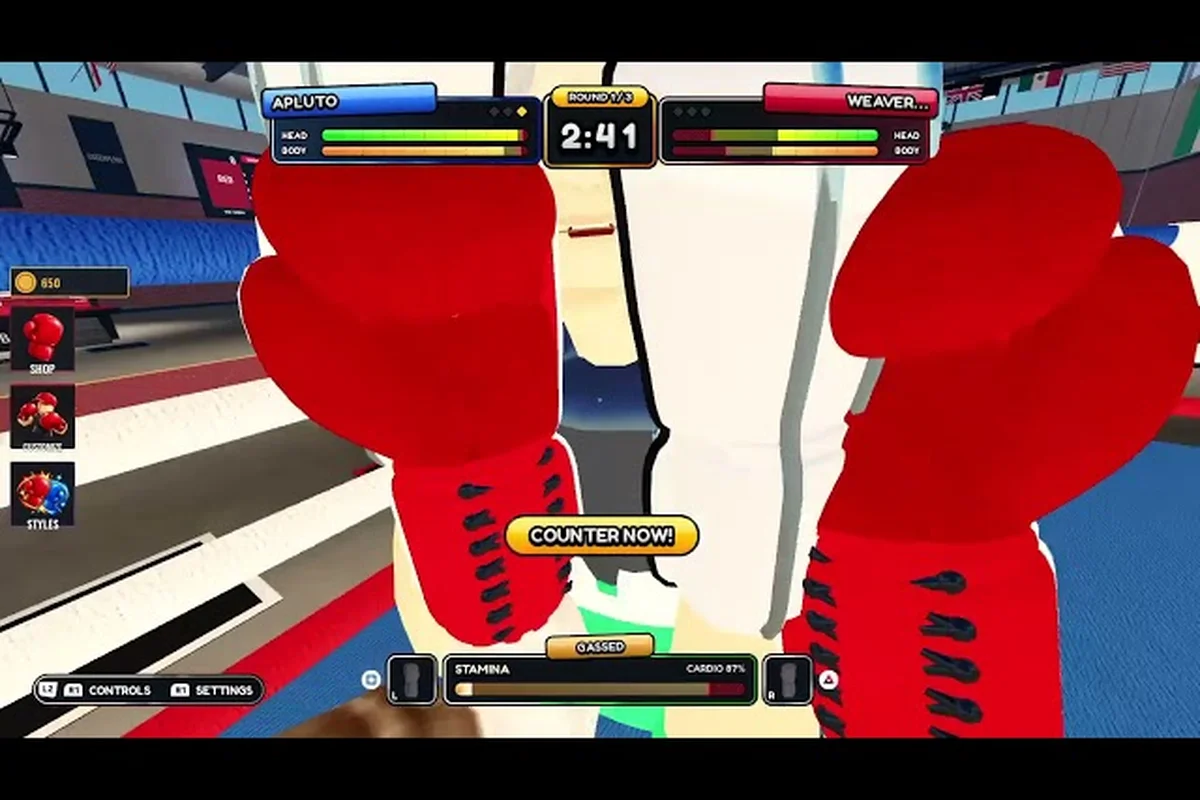
Reach is the single biggest equalizer in First Person Boxing, and most new fighters do not even realize they are giving it away. According to the official store page, the game lists punches, slips, guards, counters, and a stamina pool as the five core mechanics — and reach advantage is what ties them all together. If you understand how to step into your range, time your entries, and ration your gas tank, you can dictate every exchange before the bell rings. This guide breaks down how boxing reach advantage works inside the experience, then layers in timing drills, rhythm pacing, and stamina management so your offense stays sharp for the full round.
Reach Advantage and Why It Controls Every Exchange
Reach advantage is the position where you can land a clean punch before your opponent can land one back. In a first-person perspective the mechanic is intuitive: if your arms extend further than theirs, you own the outside lane. The official description confirms the game runs on player-versus-player and player-versus-AI modes inside servers of up to 16 players, so reach is contested constantly across multiple match types. Standing at the edge of your effective range lets you poke, probe, and force reactions without trading damage.
The first thing most newcomers miss is that reach advantage is not a permanent stat — it is a state you create by stepping, pivoting, and angling. A taller opponent can still lose the range game by leaning too far forward, and a shorter fighter can steal it back by ducking inside. What matters is where your guard sits relative to their head and torso when the punch input is pressed.
Three Layers of Range
Understanding these three layers is what separates fighters who react to distance from those who dictate it — a tall boxer who only knows how to swing long will bleed entries against a crouching infighter, while a short pressure fighter who never measures the outside layer will walk onto jabs all night. Think of it as a vertical stack: each band demands its own stance width, footwork cadence, and shot selection, so a reach advantage only converts into points when you consciously shift between them instead of camping in the one that feels safest.
| Range Layer | Distance Description | Who Owns It | Best Input |
|---|---|---|---|
| Outside | Just beyond opponent's punch arc | Longer-reach fighter | Jab / range-finding punch |
| Mid | Both fighters can land clean | Whoever enters first | Power punch, counter |
| Inside | Below opponent's elbow | Shorter or faster fighter | Hook, slip into counter |
The outside layer is where the boxing reach advantage lives. If you can keep the fight at arm's length, you force your opponent to either commit to a long entry (which telegraphs) or eat a clean shot. The mid layer is the danger zone, and the inside layer is where reach gets neutralized by head movement and guard work.
Why Range Beats Raw Power
Players who chase knockouts often ignore reach and walk into flush counters. The community reports that fighters who consistently hold the outside line land more clean shots across a three-minute session, simply because they are not absorbing punishment while they throw. A power punch at mid range that gets parried loses you both health and the boxing stamina management pool, while a controlled jab at outside range costs almost nothing and keeps you ready to react.
Reach and positioning are taught together because the footwork that gets you to outside range is the same footwork that keeps you there after a missed punch. If you are still learning how to position yourself relative to your opponent, the distance management guide walks through the pivot angle, lead-foot spacing, and reset steps that turn a one-reach edge into a repeatable rhythm. Treat the reach as a setup, not a finish — your jab scores because your feet already owned the line before you committed to the punch.
Timing Drills That Make Reach Count
Reach without timing is just flailing. The official store page lists punches, slips, guards split into head guard and body guard, counters, and a stamina pool — and every one of those mechanics has a timing window. Building reliable timing drills is what turns a passive reach game into a finishing one.
The Three Timing Windows
Every punch, slip, and guard has a tell that, once read correctly, hands the long-limbed fighter a free tempo of distance control. The exact frame data is unpublished, but community testing on the live build suggests three reliable windows you can practice against AI: a load window where weight shifts backward, a commit window where the opponent steps or winds up, and a recovery window where the arm returns to guard. Drilling all three on the same sparring partner teaches you to chain a range-finding jab into a controlled pivot — the core loop that turns a static reach advantage into repeatable scoring output instead of a one-off lucky pot-shot.
| Window | Cue | Best Response | Risk If Missed |
|---|---|---|---|
| Load | Opponent shifts weight back | Hold range, do not commit | Free jab lands on you |
| Commit | Opponent steps forward or winds up | Slip, guard, or pre-emptive jab | Clean counter to your head or body |
| Recovery | Opponent's arm returns to guard | Step out, reset range | You are caught in mid-range |
The load window is where boxing reach advantage is most powerful. While your opponent is still loading their punch, you have the time and space to fire a range-finding jab and reset the distance. The commit window is where you either slip into a counter or hold a tight guard — the how to counter guide covers the counter inputs in detail. The recovery window is your free exit; the opponent is overextended and cannot chase you for at least a beat.
A Daily Timing Routine
You do not need a 30-minute session to sharpen timing — a focused 10-minute boxing timing drills loop against the practice AI covers the three defensive windows (load, commit, recover) and reinforces boxing rhythm that PvP opponents will never let you set up for free. The short duration matters because boxing stamina management is the real ceiling on improvement; drilling until exhaustion actually widens your recognition gap, since tired reflexes respond to telegraphed patterns instead of the half-cue mixups you face online. Treat each block as a single rep, reset your stance after every exchange, and let the three windows stack into boxing pacing you can carry straight into the next match.
-
Minute 1-2: Hold the outside line, throw one jab, then back out. Do not commit to anything else.
-
Minute 3-4: Force the AI to commit first, then slip and fire a single counter. Reset.
-
Minute 5-6: Mix slips and guards — head guard on high cues, body guard on low cues.
-
Minute 7-8: Practice boxing pacing — throw two punches, then hold for five seconds, then throw one. Repeat.
-
Minute 9-10: Open up slightly. Land three clean punches and exit. Focus on rhythm, not damage.
This routine builds the muscle memory for boxing timing drills without burning your stamina pool on the practice mode AI. Players who run a similar loop report sharper entries in PvP because the load window is now a reflex, not a guess.
Rhythm and Pacing: The Heartbeat of Offense
Boxing rhythm is the pattern of action and rest that you impose on your opponent. Boxing pacing is how long you sustain that pattern before the round ends. The two work together: rhythm is the beat, pacing is the song length. If you can control both, you decide when the fight is intense and when it slows down.
The Three Rhythms Every Boxer Needs
There are three core rhythms that show up in First Person Boxing — Staccato, Crescendo, and Syncopated — and each one punishes a different mistake an opponent makes when trying to close the distance against your reach advantage. Staccato breaks overcommitment by denying rhythm reads, Crescendo punishes passive defense by stacking pressure into a finishing flurry, and Syncopated disrupts the timing drills that disciplined boxers rely on to close the gap. Choosing which rhythm to deploy round-by-round is what turns a static reach edge into active scoring damage.
| Rhythm | Description | Punishes | Risk |
|---|---|---|---|
| Staccato | Single jabs with full reset between each | Overcommitting opponents | Low damage output |
| Crescendo | Slow build into a flurried combo | Passive defenders | High stamina cost |
| Syncopated | Inconsistent timing, irregular bursts | Predictable patterns | Hard to learn, easy to overextend |
Staccato rhythm is the safest way to maintain a reach advantage. You throw one punch, reset your feet, and throw again. The opponent cannot time a counter because there is no pattern to read. Crescendo rhythm is the finisher — you build pressure with jabs, then unload a multi-punch sequence. Syncopated rhythm is the advanced layer, and it works because the opponent's timing drills are tuned to a regular beat. Mix up your rhythm every round and your opponent will start guessing.
How to Read Your Opponent's Rhythm
Reading rhythm is the flip side of setting your own. Watch their feet, not their hands — feet telegraph rhythm faster than arms do. A fighter who bounces evenly is in a staccato pattern, a fighter who leans forward as they throw is in a crescendo, and a fighter who freezes between bursts is in a syncopated pattern. The official description confirms slips, counters, and a stamina pool all key off what your opponent is doing, so reading rhythm feeds directly into the defensive and counter systems.
For a deeper breakdown of how the five core mechanics — rhythm, reach, stamina, defense, and offense — interlock and feed off each other in combat, the mechanics overview walks through each one's stamina cost, input timing, and reward windows so you can see exactly why reading your opponent's tempo is the prerequisite for landing counters and controlling range.
Stamina Management That Keeps You Dangerous
The official store page calls out a stamina pool that slows you down when you get tired, and that single sentence is the most important defensive fundamental in the game. Every punch, slip, and guard pull from the same pool. Spend it recklessly and your last thirty seconds will be a slow, lumbering target. Spend it well and your boxing offense fundamentals stay sharp until the final bell.
The Stamina Cost of Every Action
The exact numbers are unpublished, but community playtesting has narrowed the relative stamina cost of each action down to consistent ballparks. Treat the table below as a type-level reference for boxing stamina management, not a hard rule — your reach advantage, opponent pressure, and ring position all nudge the real cost up or down in practice.
| Action | Relative Stamina Cost | When to Use It |
|---|---|---|
| Single jab | Very low | When holding range, probing for openings |
| Power punch | High | When you have a confirmed opening |
| Slip | Low | When opponent is committed, head is loaded |
| Guard (head or body) | Low–moderate | When you cannot slip in time |
| Counter | Moderate | When opponent has fully committed |
| Multi-punch combo | Very high | Only when the opponent is visibly hurt or off balance |
The single jab is the cheapest reach-maintenance tool you have. A power punch is expensive because it commits your whole body. A slip costs almost nothing but requires a read. A guard costs slightly more than a slip but trades mobility for safety. A counter is a calculated spend — if it lands, you recover momentum. A combo is the most expensive thing you can do, so save it for when the opponent cannot respond.
A Stamina Budget for a Three-Round Match
You cannot see the exact stamina numbers, but you can budget your behavior as if you had a meter. Picture a three-round fight against a taller opponent with a clear reach advantage: in round one you should spend roughly 40% of your budget establishing jab distance and reading his rhythm, in round two you escalate to about 70% by mixing counters and forcing him to shell up, and in round three you either cash out at 100% for a finish or reset your pacing if the scorecards are slipping. Treat that 40/70/100 split as a default template, then adjust the numbers based on early damage trades and ring position.
| Round | Stamina Budget | Goal |
|---|---|---|
| Round 1 | Spend 40% | Establish reach, read rhythm, land single jabs |
| Round 2 | Spend 70% | Mix in counters, force the opponent to react |
| Round 3 | Spend 100% | Commit to the finish if ahead, reset if behind |
This is a pacing template, not a rule. If you hurt your opponent early, you can spend the next stretch on pure defense while they recover. If you are behind, round three is where you burn the stamina pool on a crescendo finish.
The Empty-Pool Trap
The empty-pool trap is the most common mistake in boxing stamina management. The official description confirms that being tired slows you down, so once the pool runs dry your slips become sluggish and your guards recover late. Players who fall into this trap lose not because they ran out of skill, but because they ran out of gas. The fix is simple: if you have thrown three power punches in a row, your next action should be a slip or a back-step. Spend the free recovery window the game gives you.
For more on how the stamina pool interacts with knockdowns and the replay feature, the stamina bar breakdown covers the rest of the system. The breakdown also explains why a drained pool leaves a fighter visibly slower and easier to counter, and why holding a comfortable reserve of the bar before engaging a long-reach jabber keeps your feet set for a quick reset.
Putting It All Together: A Reach-First Game Plan
Reach advantage, timing drills, rhythm, and stamina management are not four separate skills — they are one continuous loop. Reach sets the stage, timing lets you act on it, rhythm keeps the opponent guessing, and stamina management keeps the engine running for the full match. Here is a full game plan that threads them together.
The Reach-First Decision Tree
Every exchange in a reach-first game plan should follow a simple decision tree: identify your range first, then read the opponent's shoulders and feet, then choose the highest-percentage answer every time. Drilled correctly, the same option fires before you finish thinking — the jab resets, the loaded punch gets slipped, the overcommitted opponent gets countered — so boxing timing drills and boxing rhythm become second nature rather than conscious choices. The goal is to make the same selection a strong player would make, every time, until it becomes automatic.
| Step | Question | If Yes | If No |
|---|---|---|---|
| 1 | Are you at outside range? | Throw a single jab, reset | Step or pivot to recover range |
| 2 | Is the opponent loading a punch? | Slip, guard, or pre-emptive jab | Hold position, watch feet |
| 3 | Is the opponent committed? | Counter or guard then exit | Stay at range, do not enter |
| 4 | Is your stamina pool low? | Reset to range, jab only | Continue the plan |
| 5 | Is the opponent visibly hurt? | Commit a multi-punch combo | Return to step 1 |
This decision tree keeps the boxing offense fundamentals on a leash. You are never throwing blindly, never overcommitting, and never spending stamina you have not earned. Players who follow a similar loop in practice mode report a noticeable jump in their PvP win rate because the choices become muscle memory.
Matchup Notes
Different opponents require different reach plays. The official game lists PvP and PvE modes, plus an event called RANKED + BUG FIX! with the subtitle New ranked mode! — every matchup you queue into is a real test. Here are three common opponent types and the reach play that punishes them.
| Opponent Type | Tell | Reach Play That Beats Them |
|---|---|---|
| Aggressive rusher | Steps forward every beat | Hold outside, counter on commit |
| Defensive turtle | Holds guard, waits for you | Mix staccato jabs with tempo changes |
| Rhythm brawler | Throws in 1-2-3 patterns | Syncopate your timing, break the beat |
Against an aggressive rusher, reach advantage becomes a counter-attacking tool. Against a defensive turtle, reach advantage becomes a patience test. Against a rhythm brawler, reach advantage becomes a disruption tool. The same range game wins all three, but the rhythm layer changes.
Common Mistakes to Avoid
Even experienced players slip into a few predictable patterns when they get greedy about reach. The most common one is lunging into a hook range just to land a single power shot, which collapses the jab distance you spent two rounds establishing — watch your replays specifically for moments where your lead foot crosses the midpoint of the ring without a confirmed opening, because that is almost always where a reach-advantage duel gets thrown away.
-
Chasing the knockout: dropping reach to land a power punch you do not need. Stay at range, let the finish come to you.
-
Rhythmic patterns: throwing on the same beat every exchange. Mix staccato and syncopated rhythms.
-
Empty-pool overcommitment: throwing a combo with nothing left in the tank. If stamina is low, jab and reset only.
-
Ignoring the slip input: relying on guard alone. The official description calls slips out as a named mechanic, and a free slip costs less stamina than a held guard.
-
Forgetting the body layer: only guarding high. The official description lists head guard and body guard as two separate mechanics — use both, or your opponent will rip the body.
Building a Long-Term Routine
Reach advantage is not something you learn once and own forever. The game is still young, with the latest patch dated 16 October 2026, and community data suggests mechanics get tuned regularly. A long-term routine keeps you sharp through every patch.
| Frequency | Activity | Focus |
|---|---|---|
| Daily (10 min) | AI timing drill routine | Build muscle memory for the three windows |
| Weekly (3-5 matches) | PvP ranked or casual | Test rhythm reads, adjust pacing |
| After every patch | Re-run the timing drill | Catch any tuning changes early |
| Monthly | Review one replay in full | Audit stamina spending and reach holds |
The replay feature called out in the official description is built for exactly this kind of self-review. Watch one full match a month, count your power punches, count your missed slips, and audit whether you held outside range for at least half the round. The numbers will tell you where the holes are.
Reach advantage is sharpened when your slips and counters are timed to the same rhythm windows the AI drill trains — the three timing beats (early, mid, late) that gate jab, cross, and power-punch releases. For a focused breakdown of how slips and counter timing interlock with range, the slip and counter guide pairs well with this article, and drilling both the timing routine and that defensive layer inside the same 10-minute daily block compounds the long-term payoff across every patch cycle.
Frequently Asked Questions
What is the boxing reach advantage in First Person Boxing?
Boxing reach advantage is the state where you can land a clean punch before your opponent lands one back. You create it by stepping, pivoting, and angling so your arms extend further than theirs at the moment of impact, then using timing drills to fire the moment they load a punch.
How do timing drills help me control range?
Timing drills train you to read the load, commit, and recovery windows of every opponent. Once those three windows become reflex, you can fire a range-finding jab on the load, slip or counter on the commit, and exit on the recovery — all without burning stamina or losing the outside line.
What is the best rhythm for a reach-first game plan?
Staccato rhythm — single jabs with a full reset between each — is the safest choice for maintaining reach advantage. Mix in syncopated bursts when you read the opponent locking into a pattern, and save crescendo rhythms for confirmed openings or opponents who are visibly hurt.
How does stamina management affect my offense?
The official store page confirms a stamina pool that slows you down when it empties. Every punch, slip, and guard pulls from the same pool, so spending recklessly turns your last thirty seconds into a slow, vulnerable target. Budget your stamina across the round and recover during free windows.
Can I practice reach and timing drills against AI?
Yes — the official description lists practice against AI as one of the two supported ways to play. AI opponents are a reliable way to drill the three timing windows, run a 10-minute routine, and build rhythm without risking your stamina pool in a live PvP match.