
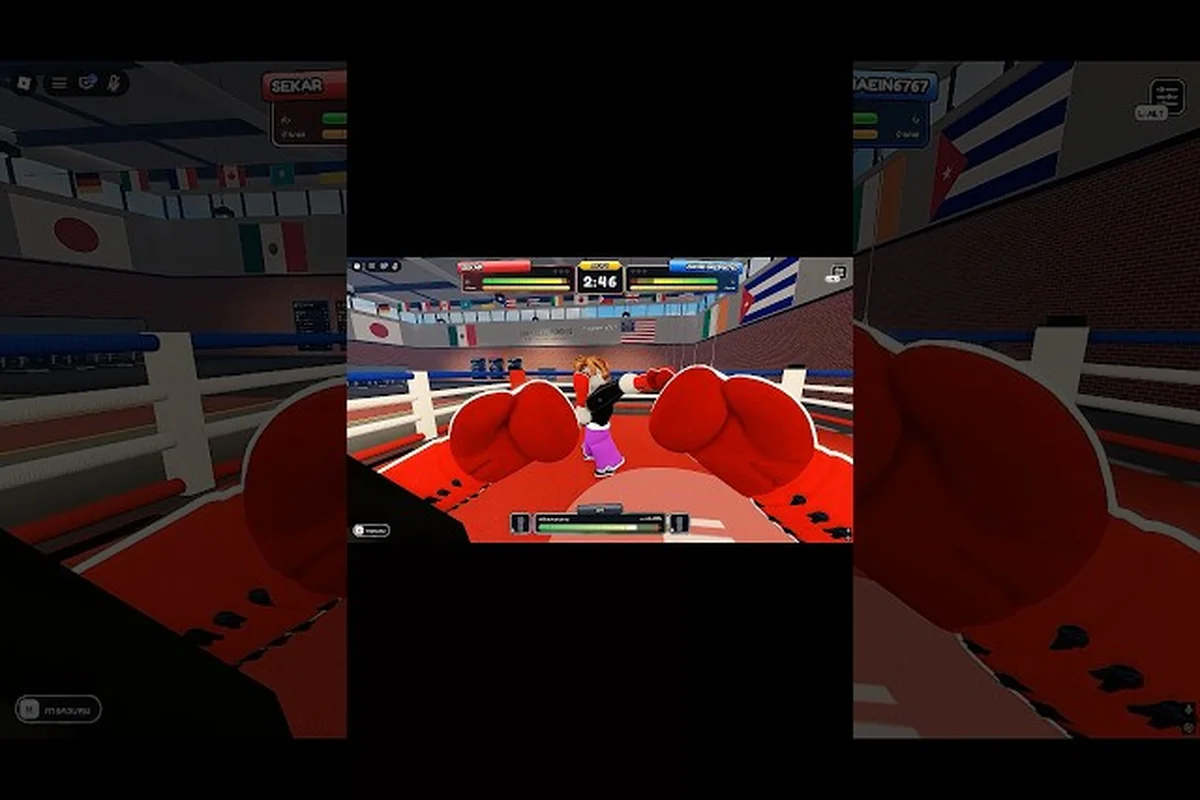
If your fighter suddenly feels heavy, your inputs lag, and opponents land punches that look like they should have missed, you are almost certainly hitting the First Person Boxing tired mechanic rather than a bad connection. The official description is direct about it: the game runs on a stamina pool, and emptying that pool slows you down — no hidden numbers, no mystery server, just a resource bar that punishes throwing more punches than you can afford.
This guide explains what the tired state actually does to movement, recovery and hit checks, why the first-person camera makes it feel so much worse than it would in a third-person fighter, and how to read the signs before your stamina is gone rather than after. It closes with pacing habits that keep you effective in long rounds, because managing the stamina pool is one of the few levers every player controls equally.
What the Tired State Actually Does to You
The First Person Boxing tired mechanic is the most common reason new players walk out of a round thinking the game is broken. You feel fast and sharp at the start of a fight, then somewhere in the middle your character starts moving like the connection is lagging. Inputs feel delayed, your footwork feels heavy, and your opponent seems to land punches that look like they should not have connected. None of that is a network problem. It is the stamina pool emptying, and it is one of the five core mechanics the developer names in the official description.
According to the official First Person Boxing page, the experience runs on a stamina pool that explicitly slows you down when it empties. That sentence is the single most important piece of information a new player can read, because every other weirdness you see on screen usually traces back to the bar being low. When the pool is full, your punches, slips, and counter attempts resolve at full speed. When it drops, the engine pulls the rug out from under everything that requires fast input, and the screen reflects that through movement speed, recovery time, and the way the hit check resolves.
The tired mechanic also sits at the center of why the game feels different from a third-person fighter. In a third-person boxing game, the camera can hide the fact that your character is dragging, because the screen still feels alive. In a first-person ring, the camera is your body, and the camera is the first thing that slows down. Players describe it as the world getting heavier, and that framing is closer to the truth than most players realise. The First Person Boxing tired mechanic turns the camera, the feet, and the punch inputs into a single tied system, and the moment the stamina pool empties, the whole rig slows down together. If you have been wondering why your character feels sluggish even when your opponent looks like he is teleporting, the bar is almost always the answer.
This matters because First Person Boxing only ships five confirmed combat mechanics, and stamina is the one that touches all of them. Punches, slips, guards for the head and the body, counters that can produce a knock-out, and a stamina pool that slows you when it empties — those five pieces are everything. The tired state is the only one that does not have an input of its own. It is the consequence of every other input you have used, which means reading the bar well is closer to a meta-skill than a single mechanical trick. Players who learn to pace the bar end up winning rounds they should have lost on raw punch count, and players who ignore it end up trading knockdowns for knockdowns until the round gets away from them.
| Mechanic | Trigger | Visible Effect When Tired | Player Perception |
|---|---|---|---|
| Stamina pool empties | Repeated punch, slip, or counter inputs | Camera, footwork, and arms all slow | "Why am I slow?" |
| Head guard | Held while stamina is low | Slowed block recovery, late guard switches | Guard feels "sticky" |
| Body guard | Held while stamina is low | Slower drop back to neutral | Cannot reset the stance |
| Counter attempt | Pressed at low stamina | Counter window still opens but resolves slowly | Counter "felt late" |
| Cinematic knockdown | Triggered by a counter or by accumulated damage | Slow get-up animation | "What is the get-up mechanic?" |
Why Players Suddenly Feel Slow Mid-Round
The phrase "first person boxing why am i slow" is one of the most common questions in the community, and the answer is almost always the same: the stamina bar dropped below the threshold where the engine starts applying the tired penalty. Players who are new to the game treat the bar like a secondary resource, the way health is secondary in a shooter. In this game, stamina is the primary resource. The hit check still runs, your punches still connect when they are in range, and the counter window still opens at the right moment, but the recovery between inputs gets longer as the bar drops, and the camera reflects that delay. The result is the unmistakable feeling that your character has been dipped in tar.
This is also the reason players sometimes describe the game as having a "knockback" or a "stagger" even though neither word appears in the official description. When you swing at a tired opponent and miss, then try to step back into a guard, the recovery animation looks longer than your opponent's. That longer recovery reads to the player as knockback, because the opponent appears to be moving away from you faster than you can close. In the community, people use the word "knockback" to describe the feeling, but it is really the tired penalty applied to your inputs while your opponent is still in the faster half of the stamina curve. The First Person Boxing tired mechanic is the entire reason the "knockback" feel exists, and the same is true for the "stagger" language players use after a counter lands. A counter that lands on a tired fighter produces an even longer recovery than the same counter on a fresh fighter, because the bar cannot refill fast enough to pull the player back into a stable stance.
| Symptom in the Ring | Real Cause | Common Mislabel |
|---|---|---|
| Movement feels heavy mid-round | Stamina pool low | "Laggy connection" |
| Punches feel late on the input | Recovery animation extended by tired state | "Input delay bug" |
| Feet stop responding to the stick | Stamina-gated footwork slow-down | "Footwork is broken" |
| Guard switches feel sticky | Low stamina extends guard recovery | "Guard is bugged" |
| Knockdown recovery looks longer than opponent's | Tired get-up animation | "Knockback or stagger bug" |
Understanding the difference between the feel and the mechanic is what separates intermediate players from beginners. Beginners ask, "is there a knockback in this game?" and treat the answer as a yes-or-no question. Intermediate players ask, "how do I keep my stamina high enough that the tired penalty does not kick in during a key exchange?" That second question is the one the First Person Boxing tired mechanic actually rewards, and it is the one that decides most rounds in the practice-versus-AI queue and the player-versus-player queue. The timing rules around that window are spelled out in detail in our First Person Boxing How Mechanics Work guide, which traces how the input buffer, stance swap, and fatigue drain all line up to make the second-question check the swing factor in every round of both queues.
Reading the Stamina Bar Through a Real Exchange
The stamina bar is a single number with a single job, but the way you read it changes depending on the phase of the round. At the start, when the bar is full, you have enough headroom to swing freely. The temptation, especially in a first-person game, is to spam the punch input because you can see the opponent's face and the proximity feels right. That is exactly the moment the First Person Boxing tired mechanic starts to bite, because the engine is not silently recovering what you spent. Every punch, every slip, every guard switch, and every counter attempt subtracts from the same pool. By the time the bar is half empty, you are already in the zone where the slow-down penalty starts to apply, and most players do not notice until they are well past the half-empty mark.
The trick is to read the bar in three phases: full, working, and tired. Full means the bar is in the top half and you have not yet paid any recovery tax. Working means the bar is in the middle band and you should be using only committed inputs — single punches, deliberate slips, and single counter attempts — instead of chains. Tired means the bar is in the bottom band and the slow-down is already on, which is the moment you should switch to movement and guards only. The bar does not have published numerical thresholds, so this three-phase model is type-level guidance rather than a precise number, but it matches the way players report the slow-down in their own matches.
| Stamina Phase | Visual Cue | Recommended Input Set | What to Avoid |
|---|---|---|---|
| Full | Bar sits high, no slow-down | Punch chains, slip drills, counter attempts freely | No constraint |
| Working | Bar visibly lower than round start | One committed input at a time, reset to guard between actions | Long punch chains, repeated slips |
| Tired | Bar near empty, camera and arms feel heavy | Footwork only, head guard or body guard, no punches | Any input that burns the bar faster than it refills |
The reason this matters is that recovery is not symmetric. The bar refills fastest when you are not pressing anything, and it refills at its slowest when you are mashing inputs. A player who throws two punches, slips, then guards, then throws two more will end the exchange with less bar than a player who throws one punch, resets to neutral, then throws another. The first player looks aggressive and loses the round to the tired penalty. The second player looks patient and wins because the bar never drops into the tired band in the first place. The First Person Boxing tired mechanic is not punishing aggression; it is punishing unread aggression, and the bar is the only signal you have to read.
The Tired State and Why Hit Detection Starts to Feel Wrong
The First Person Boxing tired mechanic also has a relationship with hit detection that is worth understanding. The game runs a hit check on every committed input, and the result of that check depends on range, the input type, and the relative stamina state of both fighters. When two fresh fighters trade punches, the hit check runs cleanly: one lands, one misses or is blocked, and the round continues. When a tired fighter trades with a fresh fighter, the hit check still runs, but the tired fighter's recovery is so long that even a landed punch is followed by a slow step-back. The opponent, who still has bar to spend, uses that slow step-back to land a free follow-up. Players describe this as "stagger," and once again the word is a feel, not a system. The system is just the tired penalty on the bar.
This is the moment where the First Person Boxing tired mechanic starts to feel unfair to newer players. The hit check did not lie, your punch did land, but the follow-up window opened against a faster opponent. The counter window behaves the same way. A counter attempt is one of the most expensive inputs in the game in terms of stamina, and the official description explicitly notes that counters can produce a knock-out. If you throw a counter while the bar is low, the counter still resolves if the timing is right, but your character will be slow to return to a neutral stance, which leaves you open to a follow-up. The solution is the same one the bar always suggests: do not throw counters from the tired band, and if you find yourself in the tired band, do not look for counters at all.
| Situation | Hit Check Result | Why It Feels Wrong | Correct Response |
|---|---|---|---|
| Fresh trade, both players in the top half | Clean hit, clean recovery | Nothing | Continue the exchange |
| Tired trade, opponent still in working phase | Hit lands, but your recovery is longer | "Stagger" feel | Reset to footwork, do not chase the follow-up |
| Counter on a tired bar | Counter resolves, but return to neutral is slow | "Why is my counter slow?" | Save counters for the full and working phases |
| Guard switch on a tired bar | Guard catches the punch, but switch back is slow | "Guard feels sticky" | Hold the guard until the bar starts refilling |
| Knockdown from a counter | Cinematic replay plays | Recovery is the longest in the round | Use the replay to refill the bar fully |
The pattern in the table is consistent. The bar is the upstream cause, the slow-down is the immediate effect, and the hit check still resolves the same way. Players who learn to read the bar do not need to learn any new mechanic — they already have the inputs, they just need to use them in the right stamina phase. That is the entire First Person Boxing tired mechanic at a strategic level: pick the right phase for the right input, and the rest of the round takes care of itself.
Pacing the Round So the Tired State Never Decides It
Pacing is the word intermediate players use for this, and it is the cleanest way to think about the First Person Boxing tired mechanic. The round is not a sprint, and the bar does not reward a sprinting approach. The bar rewards a controlled approach where each input is committed in the right phase and the recovery windows are respected. In a three-round practice match against the AI, the same pacing structure works. In a player-versus-player match, pacing matters even more, because the other player is also reading the bar and waiting for the moment you drop into the tired band.
The easiest way to build a pacing habit is to think of every input as a stamina transaction. Each input has a cost, the bar has a balance, and the bar refills at a known rate when you stop spending. The cost of a single punch is small. The cost of a punch chain is large. The cost of a slip is moderate. The cost of a counter is large. The cost of a guard switch is small. The cost of holding a guard is essentially zero. When you frame every input this way, the answer to most pacing questions becomes obvious. If the bar is high, you can afford a counter. If the bar is low, you cannot. The First Person Boxing tired mechanic is not a hidden system, it is just a budget that you have to read in real time.
| Input | Relative Stamina Cost | Best Phase to Use | Worst Phase to Use |
|---|---|---|---|
| Single punch | Low | Full or working | Tired |
| Punch chain (two or more) | High | Full only | Working or tired |
| Slip | Moderate | Full or working | Tired |
| Guard switch (head to body) | Low | Any phase | None |
| Holding a guard | Negligible | Any phase | None |
| Counter attempt | High | Full only | Tired |
| Footwork only | Very low | Any phase | None |
The table is built from type-level observations rather than published numbers, because the developer has not published stamina costs, recovery times, or threshold values. The relative ordering matches what players report in the community, and the cost labels are the most common way players describe them. The official page confirms the bar exists and that emptying it slows you down; the community confirms the relative costs. Together, that is enough to plan a round.
The pacing habit also helps with the "get up mechanic" question that newer players ask after a cinematic knockdown. The official page confirms that counters can produce a knock-out and that the game shows cinematic knockdowns with replays, but it does not describe a get-up input. The community experience is that the get-up is automatic: once the replay finishes, your character returns to a standing stance with the bar refilled to a working state. The pacing habit tells you what to do with that refill. Do not spend it on a revenge counter. Reset to a guard, take one or two footwork steps, and only then start a fresh exchange. The First Person Boxing tired mechanic is at its most dangerous in the three seconds after a knockdown, because the temptation to chain a counter into a punch is exactly the input set that empties the bar fastest.
| Post-Knockdown Temptation | Stamina Cost | Why It Fails | Better Alternative |
|---|---|---|---|
| Immediate counter attempt | High | Bar not yet refilled, counter resolves slowly | Reset to a guard, then counter on the next exchange |
| Revenge punch chain | High | Drops straight back into the tired band | One single punch, then guard |
| Mashing inputs to skip the replay | Negligible cost but breaks the recovery | The bar cannot refill under mash | Stand still until the replay ends |
| Holding a guard through the replay | Negligible | Bar refills under the guard | Best option in nearly every knockdown |
How the Tired State Reshapes the Whole Round
The round-level effect of the First Person Boxing tired mechanic is that it splits the fight into two halves: a fresh half where you have access to every input, and a tired half where you have access to almost nothing. Beginners play both halves the same way, which is why they feel like the game is working against them. Intermediate players play the fresh half aggressively and the tired half defensively, which is why they feel like the game rewards their choices. The two halves are not equal in time, and they are not equal in input access, but they are equal in importance. A round won in the fresh half can be given back in the tired half, and a round that looks lost in the fresh half can be rescued in the tired half by a player who knows how to refill the bar under a guard.
The two halves also interact with the Five Mechanics. Punches, slips, guards, counters, and the stamina bar all live in the same exchange, and the tired state changes the relative value of each one. Slips become more valuable in the tired half because they cost less than counters and they still produce a counter window. Guards become more valuable in the tired half because they refill the bar. Punches become less valuable in the tired half because they cost more than they earn. Counters become almost unusable in the tired half because they are the single most expensive input and the slow recovery turns them into a liability. The First Person Boxing tired mechanic is, in effect, a routing problem: every input belongs in one half, and the player who routes correctly wins.
| Half of the Round | Available Inputs | Goal | Common Mistake |
|---|---|---|---|
| Fresh (bar full) | Punch, slip, guard, counter | Land damage, set up counter windows | Spending too much in the first exchange |
| Tired (bar low) | Footwork, guard, slow slip | Refill the bar, avoid big inputs | Chasing a counter you cannot afford |
Players who learn to read the bar also learn to read the round, because the bar is the cleanest signal the game gives. The official page does not list stamina thresholds, recovery times, or the exact moment the slow-down kicks in, and the community has filled in the type-level picture from match experience. That picture is consistent enough that it can be treated as a working model. Treat the bar as the round's clock, treat the tired state as the round's tax on bad pacing, and the First Person Boxing tired mechanic becomes a system you can play with instead of a problem you have to survive.
The biggest mental shift is to stop thinking of the bar as a resource that exists separately from the rest of the fight. The bar is the rest of the fight. Every input you make is a withdrawal, and the bar is the only thing that decides whether the next input will resolve at full speed or in the slow, sticky half of the stamina curve. The First Person Boxing tired mechanic is the single thing that turns a five-mechanic game into a real boxing game, because real boxing has the same rule: spend too much too early, and the second half of the round belongs to the opponent. The bar just makes that rule visible.
Frequently Asked Questions
What does the First Person Boxing tired mechanic actually do?
It is the official stamina penalty that slows your character when the bar empties. The camera, the footwork, and the recovery animation all slow down together, which is why the round feels heavier in the second half. The mechanic is named on the official store description and applies to every input the game ships.
Why does my character feel slow even when my connection is fine?
That is the tired penalty from the stamina bar. The bar drains on every punch, slip, guard switch, and counter attempt, and once it drops low enough, the engine slows your recovery. The hit check still runs the same way, but your inputs resolve later than your opponent's, which feels like input delay but is really the bar.
Is there a get-up mechanic after a knock-down?
The official page confirms cinematic knock-downs with replays, and the community experience is that the get-up is automatic once the replay ends. There is no published get-up input, so the safest play is to hold a guard through the replay and let the bar refill before you press anything.
Why do players call it knockback or stagger if those are not in the description?
Players use those words to describe the feel, not the system. The system is the tired penalty on the bar. When a tired fighter swings and misses, the recovery animation looks longer than the opponent's, which reads as knockback. When a counter lands on a tired fighter, the follow-up window opens against a faster opponent, which reads as stagger. The cause is the bar in both cases.
Does the tired mechanic change the way the counter window works?
Yes, but only the recovery, not the timing. A counter still opens at the right moment, but a tired fighter recovers more slowly from the counter attempt, which leaves them open to a follow-up. Saving counters for the full phase of the bar is the standard way to avoid that problem, and the First Person Boxing tired mechanic is the reason the rule exists.