
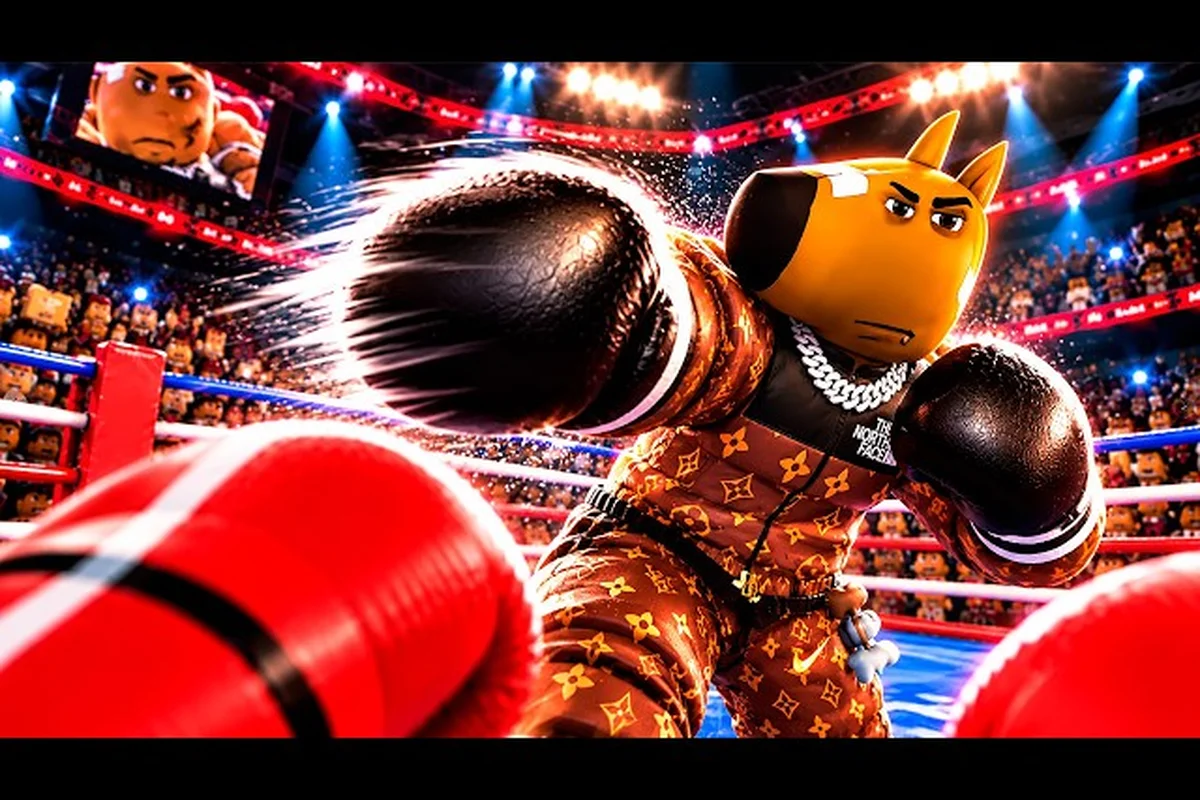
Hit detection in First Person Boxing is the silent engine that turns every camera twitch, guard tap, and slip into a clean hit, a glancing graze, or a total miss — and once you can see how that engine actually reads your input, the difference between a round you win and a round you stumble through comes down to which defensive tool you reach for and when. The official page for the experience names five core mechanics (punches, slips, a head guard, a body guard, and counters that can produce a knockout) plus a stamina pool that slows you when it empties, and that combination is what every defensive decision is really being judged against. The rest of this guide walks through how the hit check works behind that description, why a slip is usually a stronger response than a static block, and how stamina drain quietly rewrites the counter window after every exchange.
How the Hit Check Reads Your First-Person View
The most important thing to internalise about the first person boxing hit detection system is that the camera is the player. The engine does not calculate damage from a third-person skeleton, and it does not look at where the fist icon appears on screen. According to the official Roblox experience page, every punch, slip, counter, and knockout is controlled from a first-person view, and that means where your camera is pointing is what decides whether an offensive input connects.
The Three Things the Engine Compares
Every time you press a punch or counter input, the engine resolves three checks in the same frame: it reads the camera-to-target alignment, the defensive state of the target, and the stamina state of the defender. The order matters because a failed camera-to-target alignment short-circuits the other two — the punch is treated as a whiff and no stamina cost, guard state, or counter window is evaluated, which is why a slightly off-center crosshair produces the "I missed a clean shot" feel even when your hand animation clearly connected. Only after alignment passes do the defensive and stamina checks decide whether the exchange becomes a clean hit, a guarded hit, a slipped punch, or a successful counter that can chain into a knockout.
| Check | What the engine reads | What the player feels |
|---|---|---|
| Camera-to-target alignment | Whether the crosshair sits over the opponent's head or body volume | "I missed a clean shot" |
| Defensive state of the target | Whether a head guard, body guard, slip, or counter is active when the punch arrives | "It bounced off" or "it slipped through" |
| Stamina state of the defender | Whether the opponent is in a normal state or the slowed "tired" state the stamina pool creates | "He barely reacted in time" |
Once those three checks resolve, the engine routes the exchange to one of a small set of outcomes: a clean hit, a guarded hit, a slip-avoided punch, or a successful counter that can lead to a knockout with the cinematic knockdown the description advertises.
Why Camera Position Matters More Than Range
A common early-round mistake is to treat First Person Boxing like a third-person fighter and focus on footwork icons. Community testing reported by players suggests the camera is the dominant alignment cue: if the opponent's head fills the centre of the screen, head-aimed punches tend to land; if the body is exposed and the head is offset by a slip input, the same punch animation can whiff entirely. That is the heart of why first person boxing hit detection feels different from the usual Roblox brawler and why range is best read from the camera, not from on-screen markers.
Guard, Slip, or Counter — Choosing the Right Defensive Mechanic
The official description splits the guard into a head guard and a body guard, lists a slip as a separate input, and adds a counter that can produce a knockout. The blocking vs slipping decision in First Person Boxing therefore comes down to which input you believe the opponent is about to commit to, how much stamina you have left to spend, and whether you are prepared to be the one finishing the exchange.
Defensive Tool Tradeoffs at a Glance
The table that follows breaks down each defensive tool — head guard, body guard, slip, and counter — by what it actually absorbs on contact, what it leaves open, and the stamina tax you pay when the input is matched against the wrong attack type. Because first person boxing hit detection reads the active input against the incoming strike and its timing, a mismatched defense does not just fail to stop the punch, it also accelerates the drain on the pool that governs whether your next defensive input arrives in time.
| Defensive tool | What it absorbs | What it leaks | Stamina cost it imposes on you |
|---|---|---|---|
| Head Guard | Punches aimed at the upper volume | Body punches, slips that move the head offline, counters timed late | Constant drain while held, faster drain when hit |
| Body Guard | Punches aimed at the lower volume | Head punches, slips that bend at the waist | Constant drain while held, faster drain when hit |
| Slip | Most single punches regardless of aim (when timed with the attack) | Sustained pressure, multi-punch strings, opponents who read the slip and throw the opposite level | Short stamina spike on input, then recovery |
| Counter | A single committed punch from the opponent | Anything that is not a clean single punch landing on a hittable volume | High stamina cost, but a successful counter can produce a knockout |
Players who treat one of these as their default for an entire round tend to run out of stamina or get countered themselves, because the engine rewards input variety more than input repetition. The most successful defensive rhythm reported by community play mixes a slip, a guard tap, and a guard release, then converts the slip into a counter when the opponent telegraphs a single loaded shot.
Why a Slip Usually Beats a Static Block
A static guard is "always on" by design, which sounds safe, but in practice it drains the stamina pool continuously, and the moment that pool empties the official description states your character is slowed down. A slip is a short, single-input movement that moves you off the punch's line and recovers quickly, so it spends less stamina overall and leaves you in a position to convert the dodge into a counter. In first person boxing blocking vs slipping terms, the block is a shield you keep raised until it breaks, while the slip is a step offline that turns the opponent's offence into your offence. That is also why a guard that stops working is usually self-inflicted: the stamina pool empties under a held guard long before anything else can go wrong.
The Stamina Pool and Why It Reshapes Every Exchange
The stamina pool is the single mechanic that touches every other choice on the screen. The official page describes it simply: getting tired slows you down. Everything else — when to guard, when to slip, when to counter, and how the hit check resolves — is filtered through that slowdown. Stamina recovery in this game is not a separate buff you toggle; it happens whenever you stop spending, and the rate at which it refills is shaped by how aggressively the previous exchange played out.
What the Tired State Does to the Hit Check
When the pool is near empty, two things change at once: your character moves and recovers more slowly, and the engine's defensive checks become harder to satisfy on time. A slip input that would normally dodge a punch arrives late, so the punch lands. A guard that would normally absorb the hit instead opens for a frame longer than it should, so the hit slips through. A counter that would normally be timed to the opponent's commit instead fires after the opponent has already recovered, so the counter whiffs. That is why the stamina pool is not just a "tired" debuff — it is the layer that decides whether the rest of the first person boxing hit detection system is even allowed to read your input on time.
Stamina-Saving Defensive Habits
The five habits below were compiled from player reports and community testing as the most reliable ways to keep the stamina pool above the danger line across a full match, since a single dropped exchange in the second half of a round can flip a clean lead into a situation where one exhausted fighter cannot answer the next punch. Each one trades a small defensive certainty for a stamina saving that compounds over three or four minutes of ring time.
-
Release guards between attacks. A held guard drains the pool continuously; a guard tap to answer a single punch is far cheaper.
-
Slip the first punch of a string, guard the second. A single slip is usually enough to dodge the opening shot, and the second punch is often a committed attack the guard can absorb.
-
Walk out of range instead of guarding. Camera-based range reads let you step back before the punch is thrown, which costs nothing.
-
Counter only on clean single shots. A counter that fails to land costs a large chunk of stamina, so saving it for one clear opening preserves the pool.
-
Reset after every counter. After a counter lands, retreat for a beat so the pool can refill before the next exchange.
These habits all funnel into the same goal: keep enough stamina in the tank that the tired state never has to decide the round for you. If you want a deeper look at how the stamina bar maps onto round outcomes, the stamina bar breakdown covers the same mechanic from the resource-management angle.
When to Counter and When to Guard
The when-to-counter decision is the offensive mirror of the blocking vs slipping decision. The official description confirms that a successful counter can produce a knockout, which means the counter is the highest-reward input in the game, but it is also the most expensive and the most punishable when mistimed. The when-to-guard question is the opposite: a guard is the cheapest defensive input per second, but it is also the input most likely to leave you tired, exposed, and unable to answer the next exchange.
Spotting the Opening After a Miss
A counter window opens when an opponent commits to a single loaded punch and does not cancel it. The signs reported by players are the same across most matches: a small wind-up animation, a shift in the opponent's gloves, a tightening of the camera as they step into range. When you see that, the counter input is the highest expected-value response, because the engine's hit check is about to evaluate a single, isolated, non-cancelled punch against your defensive state, and the counter input is the one state that turns that isolated punch back into your offence.
A guard is the better answer in three situations. The first is when the opponent is throwing fast, short punches with no wind-up; the counter window is too short to read, and a guard tap is more reliable. The second is when your stamina is already low; a counter that fails to land drains the pool further and pushes you into the tired state. The third is when the opponent is outside counter range, because a counter input that fires at the wrong distance wastes stamina without ever reaching the hit check.
Counter, Guard, and Slip Decision Matrix
| Opponent behaviour | Best primary response | Best follow-up | Why |
|---|---|---|---|
| Single loaded punch with visible wind-up | Counter | Reset range, then re-enter | Cleanest counter window, highest KO upside |
| Fast, short punches with no wind-up | Guard tap | Slip on the rhythm break | Counter window too small to read |
| Multi-punch string with body-head alternation | Slip the first, guard the second | Counter the recovery | Avoids spending the pool on a held guard |
| Out-of-range jabbing | Step back, no input | Re-enter on a loaded shot | Preserves stamina, denies their counter window |
| You are already in the tired state | Guard tap only | Walk out, recover | Counter input is too slow to land cleanly when slowed |
The matrix is a starting point, not a rule, and the right read still depends on how the opponent reacts to your first answer. The deeper layer — how range, slip direction, and counter timing interact — is covered in the slip punches timing guide, which looks at the same chain from the offensive side.
The First Person Boxing Hit Detection Summary
The cleanest way to think about first person boxing hit detection is as a three-question match the engine runs every time you and your opponent both commit to an action: where is your camera, what is your defensive state, and how much stamina do you have left to spend? A slip wins most single-punch questions because it answers all three cheaply and turns the opponent's offence into your own counter window. A guard wins fewer questions per second but costs less per answer, so it stays useful as the conservative option when stamina is low or when the opponent's string is too fast to read. A counter wins the most questions when it lands, but it loses the round quickly when it does not, which is why the when-to-counter decision is really a question of how much stamina you can afford to gamble and how clean the opponent's commit looks.
If you are still early in the experience and want a broader read on the five mechanics named on the official page, the mechanics overview ties punches, slips, guards, counters, and the stamina pool into a single system, and it is the natural companion to the hit-detection lens this guide has used.
Frequently Asked Questions
What does first person boxing hit detection actually check when two punches collide?
The engine reads the camera position, the defensive input (guard, slip, or counter) of the target, and the stamina state of both fighters. A clean hit lands only when the camera is aligned, the target is not slipping or countering, and neither fighter is in the slowed "tired" state the stamina pool creates. The specifics of the check are not published anywhere, so the three-question model above is a player-reported abstraction, not a confirmed formula.
When should I slip instead of block in First Person Boxing?
Slip a single committed punch or the opening shot of a string, because a slip is cheaper on stamina and puts you in position to counter. Block when the opponent is throwing fast, short punches with no wind-up, when your stamina is low, or when you are outside counter range. That mix of when to guard and when to slip is what keeps the pool above the danger line across a full match.
Does a guard ever stop working on its own, or only on a specific input?
No separate guard-defeat mechanic appears in the official description, and the only stamina-related effect the page names is the slowed tired state when the pool empties. In practice, what players describe as a guard giving way is self-inflicted: a held guard drains the pool until the tired state kicks in, and the next defensive input arrives too late. Treat stamina management as the real cause, not a hidden input.
How do I recover stamina during a round?
Stamina recovers whenever you stop spending, and the fastest recovery windows are the ones where you are out of range, not guarding, and not committing to a counter or a slip. The habits that keep the pool healthy are releasing the guard between attacks, walking out of range instead of holding a block, and saving counters for single clean openings. A full round-by-round stamina plan is laid out in the stamina bar article linked above.
When is the right time to throw a counter in First Person Boxing?
The counter window opens when the opponent commits to a single loaded punch and does not cancel it. The tell is usually a wind-up, a glove shift, or a step into range. If you are already in the tired state, the counter input is too slow to land cleanly, so guard tap instead and walk out to recover. Save the counter for clean single shots, not for fast strings or out-of-range jabs.