
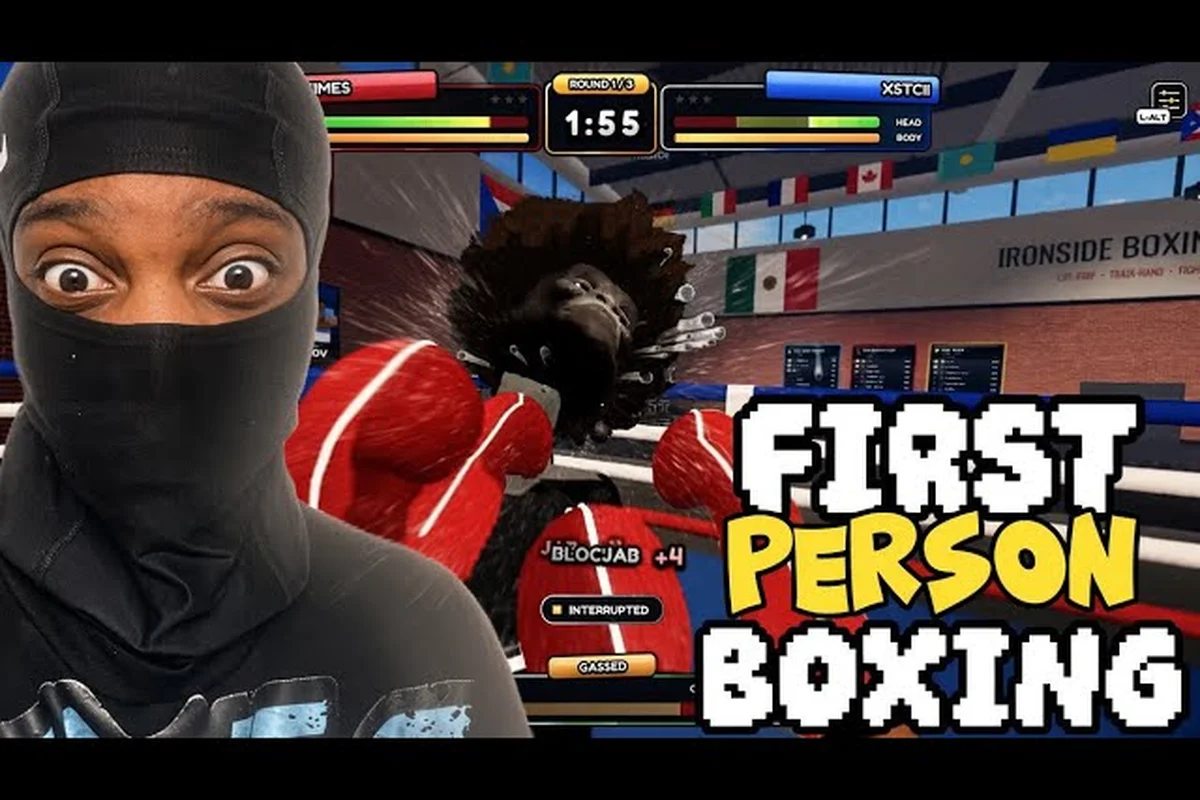
First Person Boxing ranked rewards are the payoff behind every competitive match you grind through, and knowing how to chase them efficiently separates a casual climb from a deliberate one. The ranked mode itself is brand new, shipped on 28 September 2026 alongside a bug-fix pass, and the developer has not yet published a public reward table, division list, or season timer. This means every climb right now is a learn-as-you-go effort, and the players who document their progress become the unofficial source of truth. Below is a practical competitive guide built from the published mechanics, the official event page, and community reporting on what climbing ranks actually feels like in the current build.
What Ranked Mode Ships With Today
The official RANKED + BUG FIX! event page hosted by Can You Box? is the only place where the developer has formally confirmed that a ranked mode exists. The subtitle reads "New ranked mode!" and the event launched alongside a stability patch. Beyond that confirmation, the developer has not released a tier ladder, a rating formula, or a season structure. According to community data, players are already queueing into matches, but the ladder appears to be in a soft-launch state where the reward surface is still being tuned.
Here is the breakdown of what the developer has published versus what is still unconfirmed at the time of writing.
| Mechanic | Status | Notes |
|---|---|---|
| Ranked mode availability | Confirmed live | Event page lists the mode as the new release |
| Division or tier names | Unpublished | No Bronze/Silver/Gold or equivalent ladder published |
| Rating / MMR formula | Unpublished | No numeric rating system confirmed |
| Season length or reset rule | Unpublished | No season timer or end date announced |
| End-of-season reward table | Unpublished | Cosmetic or currency payouts not listed |
| Placement matches rule | Unpublished | Calibration match count not stated |
The practical takeaway is that the climb is real, but the reward sheet is not. That gap is where this guide earns its keep: it tells you how to climb ranks on a ladder whose full structure is still being rolled out, and how to position yourself so that whenever rewards are formalized, you are already inside the payout window.
The core loop of ranked climbing in this title mirrors the five mechanics the developer named in the official store description: punches, slips, guards split into head and body, counters that can produce a knockout, and a stamina pool that drains as you trade. You can read the broader system in the ranked progression guide, but for reward hunting the takeaway is simple. Master the five-mechanic core, and you will generate wins regardless of how the ladder is tiered.
First Person Boxing Competitive Guide: The Five-Mechanic Core
Every First Person Boxing competitive guide has to start with the five mechanics the developer named, because the ladder is built on top of them. A player who can read a stamina gauge, time a slip, and land a clean counter will outclass a button-masher even on a tierless ladder. The five are: punch inputs, slip inputs, head guard and body guard inputs treated as separate actions, counter inputs that can produce a knockout, and a stamina pool that slows you when it empties.
The way those mechanics interact is the strategic heart of climbing ranks. Counter windows are the highest-value event in any round, because they can produce an instant knockout and end the match before stamina becomes a factor. Slips feed directly into counters, which is why a player who slips cleanly will find more counter openings than a player who only guards. Guards, both head and body, are reactive tools, and they cost stamina the longer they are held, which makes passive turtling a losing strategy over a long round.
The stamina pool is the silent equalizer. Every action draws from it, and when it is empty the official description states that you slow down. That slowdown window is where most knockouts in the current meta are actually happening, according to community reporting. Players who manage their stamina carefully keep their movement options open late into a round, while players who throw nonstop early become sitting targets in the second half of a match.
| Mechanic | Stamina Cost | Knockout Potential | Defensive Use |
|---|---|---|---|
| Punch input | Moderate per strike | Low alone, high in chains | None |
| Slip input | Low | None directly | Sets up counter windows |
| Head guard | Drains while held | None | Blocks high strikes |
| Body guard | Drains while held | None | Blocks body strikes |
| Counter input | Spike on execution | High, can KO instantly | Punishes committed attacks |
The takeaway for ranked climbing is that counters are the reward-multiplier, slips are the resource that unlocks counters, guards are the safety valve that costs stamina, and stamina management is the glue. A round won by counter is a round won cheaply, which is exactly the kind of round you need to climb ranks efficiently when the first person boxing ranked rewards list is finally published.
First Person Boxing Competitive Tips For Climbing Ranks
Climbing ranks efficiently in a young, patch-driven mode comes down to a handful of competitive tips that the wider community has converged on. These are not ladder-specific because the ladder structure is unpublished, but they are system-specific because they are built on the five mechanics the developer has named and the stamina system that governs them.
Tip 1: Treat the First Round as a Stamina Budget
The first person boxing climb ranks loop rewards players who finish rounds with stamina left, because that stamina carries into later rounds of a match. According to community data, players who throw a flurry in round one and then coast through rounds two and three lose to players who pace themselves. The clean way to open is one or two committed exchanges, then a defensive read, then a counter attempt when the opponent overcommits.
Tip 2: Mix Head Guard and Body Guard
Because guards are split into head and body, holding one continuously leaves the other open. Players who alternate guards based on the strike trajectory win more exchanges on average, as reported by players running solo queue sessions. The mental rule is: high strike, head guard; low strike, body guard; and if you are not sure, slip instead of guessing.
Tip 3: Counter Only on a Confirmed Read
Counters are high reward and high cost. A missed counter drains a chunk of stamina and leaves you open, so climbing ranks cleanly means taking counter attempts only when you have read the opponent's timing. This is the difference between first person boxing competitive tips that actually move your rating and tips that just feel aggressive. Patience at the counter window pays off across an entire session.
Tip 4: Use AI Practice Before Ranked Sessions
The official description lists two ways to fight: against other players and against AI in practice. That practice mode is your training ground. According to community testing, even a short AI warm-up before queuing ranked tightens reaction windows and reduces the early-session stamina dumps that throw matches. Think of practice as a calibration tool, not a side activity.
Tip 5: Stack Sessions Around Patches
Because the mode is new and being tuned, patches change behavior. The ranked climbing meta is not stable, and the players who climb fastest are the ones who climb in tight windows between updates, then reassess after each patch. This is the kind of competitive rhythm that rewards attentive players and frustrates players who set a climb schedule and refuse to adapt.
First Person Boxing Ranked Strategy: Reading The Soft-Launch Ladder
The first person boxing ranked strategy layer is unusual because the ladder is soft-launched. That means there is no public list of first person boxing ranked rewards to optimize against, no published season timer to plan around, and no division names to set as goals. What you can do is build a strategy that maximizes your position regardless of how the developer fills in the blanks. The ranked mode release breakdown covers the event itself in more detail, but the strategic frame is what matters for reward hunting.
Build a Repeatable Session Routine
A repeatable session routine is the single most underrated ranked strategy in any young competitive game, and it matters more here because the ladder is still being tuned. The routine is simple: warm up against AI for a few minutes, queue a ranked block of three to five matches, review the losses, and log out before tilt sets in. This pattern prevents the stamina-burned, frustration-driven sessions that crater climbing progress and is something the advanced gameplay guide touches on for players who want to go deeper.
Track Your Own Numbers
Because the developer has published no ranking details, your own session log is the only honest ladder you have. Track wins, losses, knockouts landed, knockouts received, and average stamina left at match end. After a few sessions the numbers will tell you whether your climbing strategy is working or whether you are treading water. Community data suggests that players who keep even a minimal log climb faster than players who go purely on feel, because the log surfaces the silent losses that tilt hides.
Anticipate the Reward Patch
The developer has not announced any reward schedule, season structure or payout event for ranked. In other competitive modes a reward sheet sometimes arrives once there is a stable climb population, but that is a general pattern rather than a published plan for this game. The practical implication is simply that players should build the habits now, since habits transfer regardless of what, if anything, is ever handed out.
First Person Boxing Ranked Matchmaking: What We Know
First person boxing ranked matchmaking is the part of the system with the least published detail, and the part that affects climb quality the most. The developer has not released a matchmaking formula, a queue population target, or a role-queue structure. What community reporting has surfaced is that matchmaking groups you with other players in the active queue, that the server capacity tops out at 16 players per match, and that the experience is cross-platform across PC, mobile, and console.
That last point matters for ranked climbing because input method influences match flow. A console player using a gamepad is matching against mouse-and-keyboard players on PC, and a mobile player is matching against both. According to community data, the cleanest climbs happen when players understand their input's natural strengths and lean into them rather than trying to play a meta designed for another device. The full matchmaking write-up lives in the ranked mode and matchmaking guide, but the on-the-ground rule is simple: play to your input's strengths, not against them.
| Platform | Input | Strength in Current Meta |
|---|---|---|
| PC | Mouse and keyboard | Fastest slip and counter windows |
| Console | Gamepad | Strong guard holds, predictable inputs |
| Mobile | Touch | Best at AI practice, harder in live ranked |
| Cross-play | Mixed | Matchmaking pools all inputs together |
The cross-play reality is that matchmaking does not currently sort by input, so your climb is partly a function of the input you bring. Players who climbed fastest in the early soft-launch window, as reported by the community, were the ones who had already accepted that and adjusted.
Frequently Asked Questions
Are First Person Boxing ranked rewards confirmed?
The ranked mode itself is confirmed live via the official RANKED + BUG FIX! event page, but a specific first person boxing ranked rewards table has not been published. The developer has not listed any tier names, end-of-season payouts, or cosmetic unlocks tied to ranked placement, so the reward surface is still officially unannounced at the time of writing.
How do I climb ranks efficiently in the current build?
The most efficient first person boxing climb ranks approach right now is to pace stamina across rounds, mix head and body guards rather than holding one, take counter attempts only on confirmed reads, and warm up against AI before each session. According to community data, players who follow that rhythm win more exchanges per match and lose fewer rounds to late-round stamina crashes than players who throw nonstop from the opening bell.
What is the best competitive strategy for solo queue ranked?
Solo queue climbs reward players who can read opponents without teammate support, which means leaning on slips and counters more than on chain punches. A common first person boxing competitive guide pattern is to play patient defense through the first half of a round, then counter-punch when the opponent's stamina dips. The mode supports up to 16 players per server but the actual competitive format details are still being tuned, as noted on the ranked tier list page.
Does ranked matchmaking cross PC, mobile, and console?
Yes. The experience runs on PC, mobile, and console, and matchmaking pools all platforms together rather than sorting by input. This is important context for first person boxing ranked strategy because input choice affects how clean your slip and counter windows are. Players climbing on mouse and keyboard tend to have faster reaction windows, while gamepad players often hold guards more consistently.
When will the developer publish the season reward sheet?
The developer has not announced a date for a season reward sheet, season timer, or rating formula. The first person boxing ranked climbing community is operating on a soft-launch ladder where the climb is real but the formal reward list is still pending. The realistic expectation, based on how other young Roblox competitive modes have rolled out, is that the first reward snapshot will land once the developer has a stable climb population to measure against, but that is community expectation rather than a published roadmap.